
Brooder Plate or Heat Lamp for Chicks: What You Need to Know


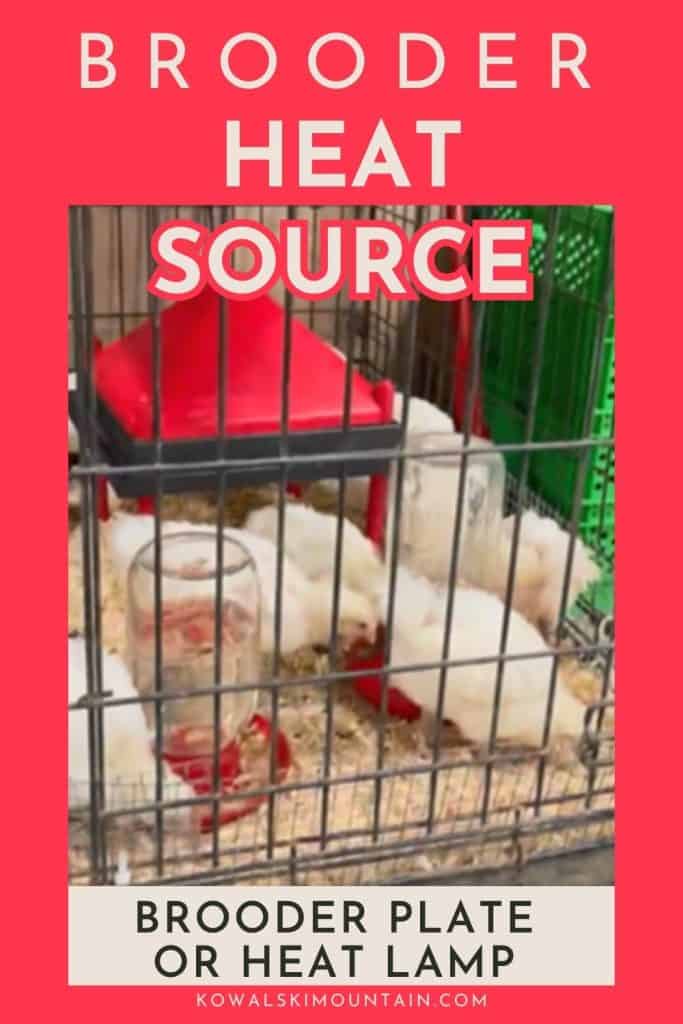
When raising baby chicks or any small birds, a reliable heat source is a necessity to keep your chicks warm. Unlike adult birds, chicks have fluff, not feathers. Chicks need to be provided with supplemental heat until they have fully feathered out and can regulate their own body temperature. Since I was a girl, we have always used traditional heat lamps in our brooders. However, in recent years, brooder plates, also known as heat plates, have become popular. So which is the best choice? Should you choose a brooder plate or a heat lamp to heat your brooder space?
What is a chick brooder plate?
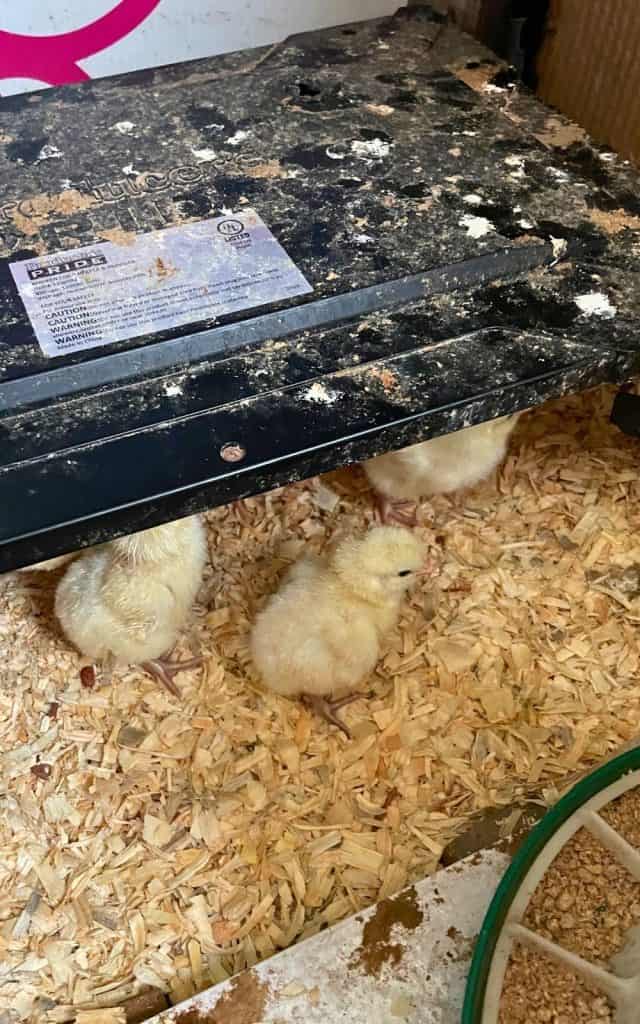
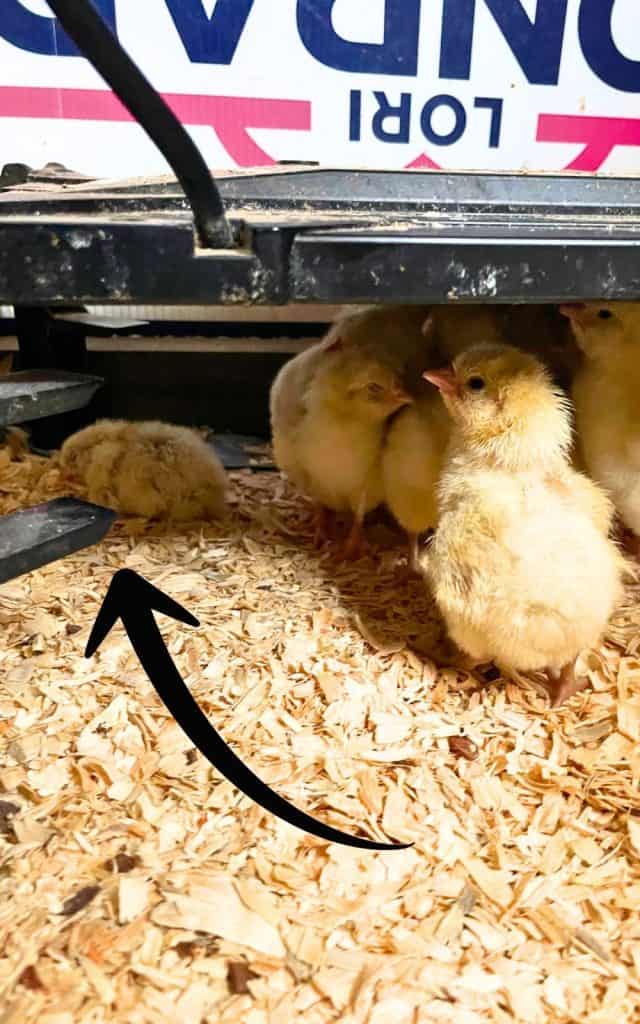
A brooder heat plate radiates heat to warm new chicks, similarly to a broody hen. Brooder plates heat to a range from 105 degrees to 115 degrees. For the chick brooder heating plate to work properly, the heating plate needs to be set low, similar to the height of a mother hen. Using the adjustable legs, adjust the height of the plate so that it allows the birds to move freely below, but not so high that they don’t receive the benefit of the radiant heat.
Some brooder plates allow you to set the legs at different heights, which allows the birds to choose where they feel warmest. The brooder plate should have a minimum of 1 1/8″ space between the heating plate and the bedding. I have one brooder plate that has a heater function. This function is intended to be used for adult birds as a vertical standing heat plate. The heater function gets very hot and is not intended to be used as a brooder for chicks.
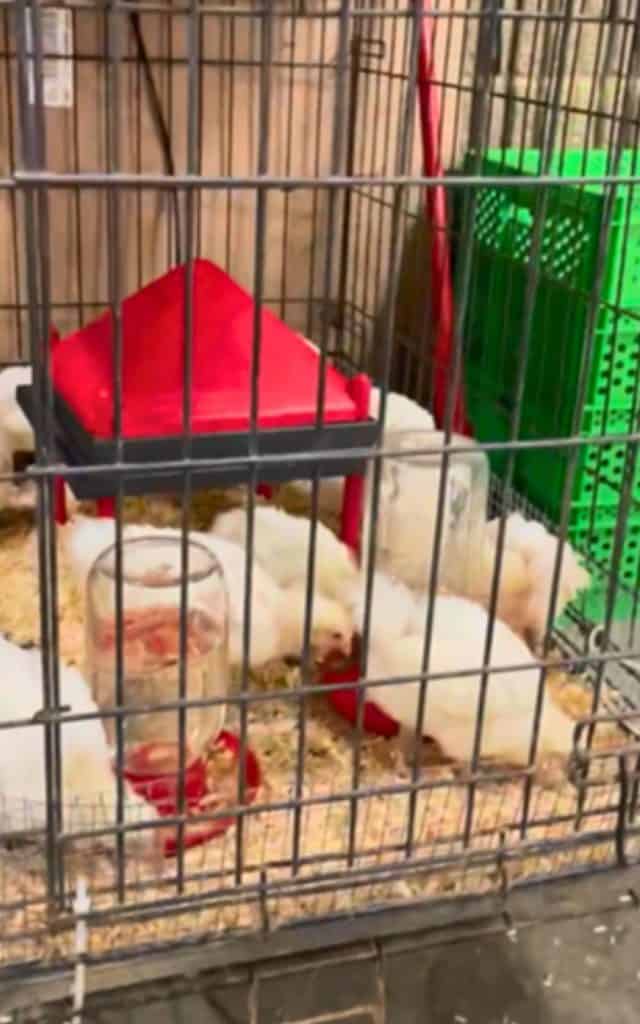
What is a chick heat lamp?
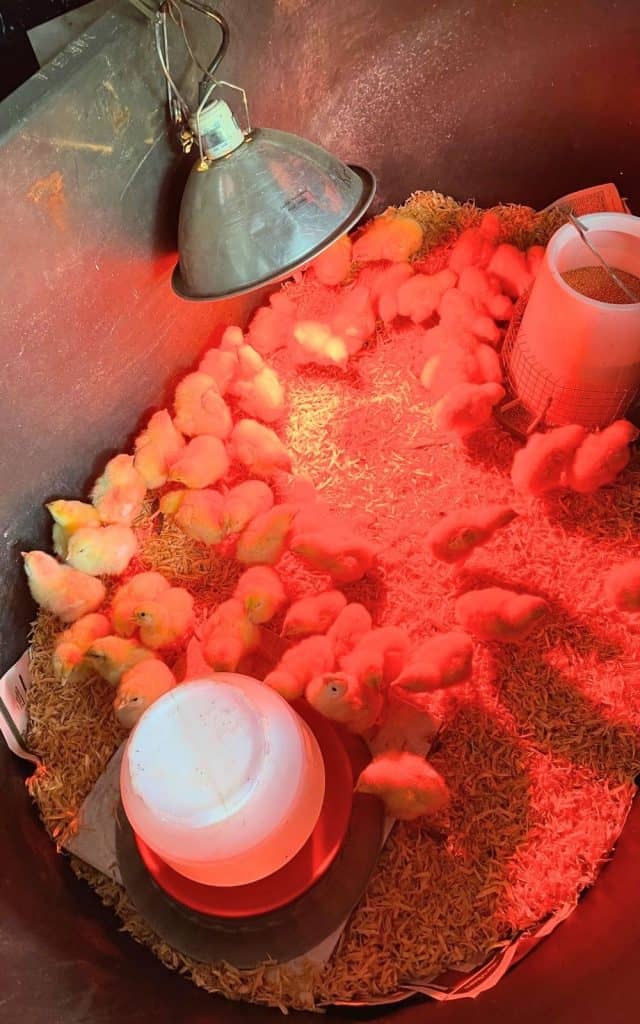
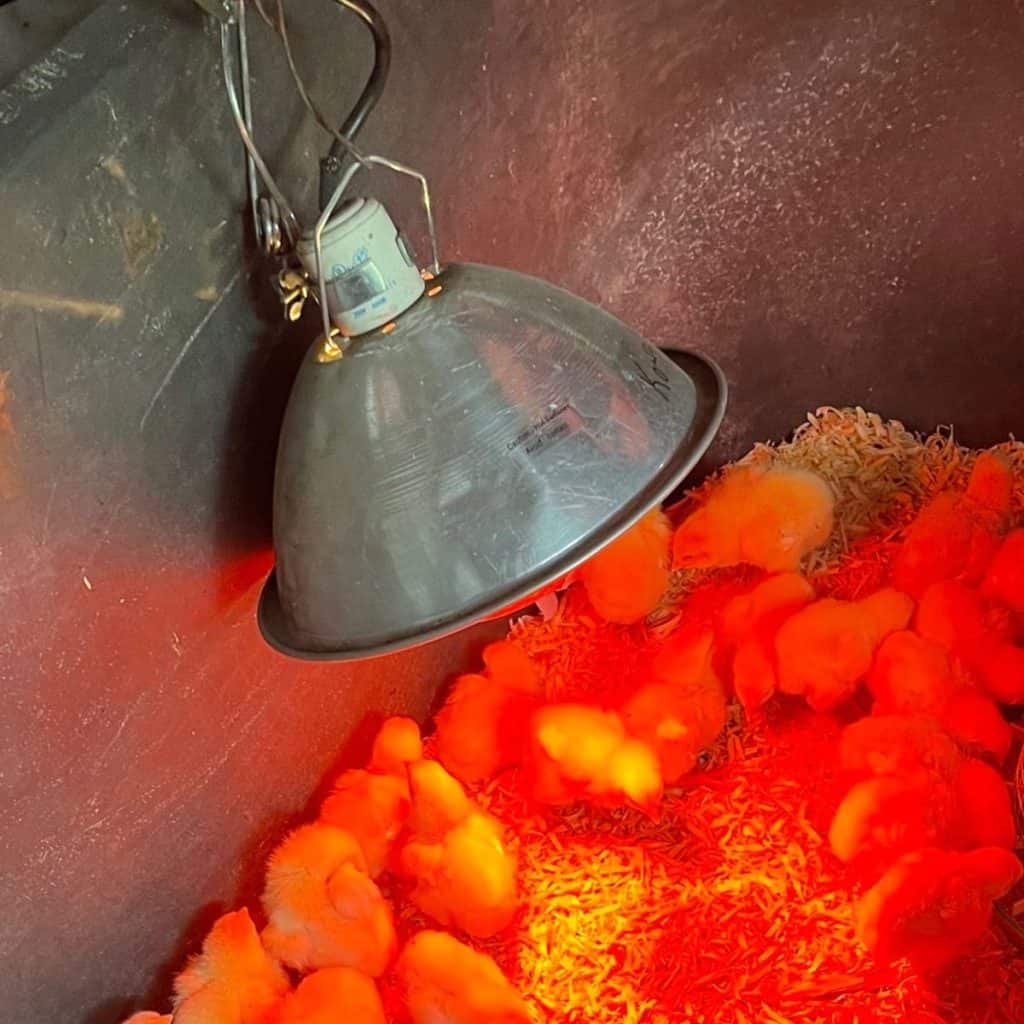
Chick heat lamps come in a few styles. They are generally shaped in such a way that the lamp reflects the heat of the light bulb towards the chicks. They have a shield covering the bulb. Depending on your ambient temperature, you can use a regular light bulb or a heat lamp bulb, also known as an infrared bulb that is designed to radiate heat. Depending on the room temperature, around the brooder will determine how close the light should be to the chicks. In a colder area, the heat lamp should be 18″ to 20″ above the chicks, while in a warmer area, 24 to 27 inches may be more appropriate.
We use an electronic thermometer that we can read from a common area in the house. This allows me to spot check the temperature in my brooder. However, the chicks will be your best guide. Cold chicks will huddle together to keep warm. Chicks that are too hot will get as far from the lamp as they can. Chicks that are comfortable will be active, evenly spaced, and appear comfortable in their space.
Pros and Cons of a Brooder Plate
One of the biggest perks of using a chick heat plate is that they are a safer choice. With a brooding plate, there is a lower risk of fire. Heating devices are one of the top three causes of barn fires. A heating plate is also more natural for chicks because it does not use continuous light to warm the chicks. This allows the chicks to have a natural circadian rhythm, sleeping when it’s dark and being active during the day, when they feed.
Brooder plates are extremely energy efficient. A typical brooder plate uses between 15 and 66 watts. Generally, devices that heat use a lot of power. In our off-grid living situation, using less energy, especially at night, is a huge perk.
Cons of Using a Brooder Plate
Brooder heating plates are expensive. They can range from $40 to $100, depending on the number of birds you are keeping.
Brooder plates are designed for a limited number of birds. Small brooder plates are appropriate for about 15 chicks, while large ones can accommodate about 50. If you raise a lot of birds, you would need multiple plate heaters to keep chicks warm.
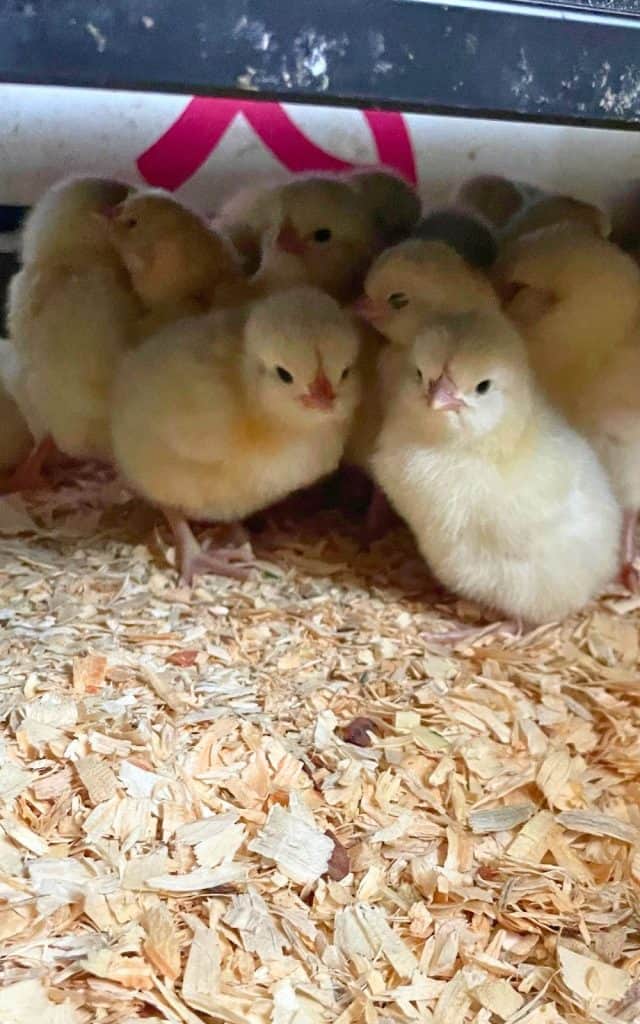
Brooder plates also encourage inactivity in chicks. Especially if chicks are cold, they will likely refuse to leave the warmth of the heater plate to eat and drink. This is especially concerning for birds that you have shipped to you. Day-old chicks ordered through mail order need to eat and drink as soon as you get them. However, they may also be chilled due to traveling. Some birds may die or fail to thrive when placed in the quandary of needing to choose warmth or food.
Ineffective in cold weather. The first time I tried to use a brooder plate it was about 50 degrees outside where my brooder was located. I used my thermometer, and despite being on the highest setting, it was only about 70 degrees under the heating plate. Chicks need to be kept at about 95 degrees until they feather out.
Another con is that the chicks make a mess of the brooder plate. Older chicks like to jump on top for the best view. Some brooder plates are fitted with an anti-roost cone that goes on the top of the device. Some are included with the brooder plate, but some are a separate purchase. Regardless the cone is well worth the extra cost. The anti-roost cone is slippery, so the chicks cannot hang around to poop!

Shop Brooder Plates
- 10″x10″ Brooder Plate: Use for up to 15 chicks, comes with Anti-Roost Cone
- 12″x16″ Medium Brooder Plate: Use for up to 30 to 40 chicks, no Anti-Roost Cone
- 18″x12″ Large Brooder Plate and Heater: Number of Chicks not specified. No Anti-Roose Cone
- 16″x24″ Large Brooder Plate: Use for up to 50 chicks, no Anti-Roost Cone
Pros and Cons of Using Brooder Heat Lamps
Heating lamps are inexpensive. Heating lamps typically run under $20. There is an additional purchase of a bulb, which can run $5 to $15. As a bonus, both heat lamps and bulbs are likely available locally at a farm store or hardware store. This is especially important if you break a bulb and need a replacement part right away.
Heat lamps warm a large number of birds. A single 250-watt heat bulb, when placed in a central location, can provide enough heat for up to 100 chicks. If you are keeping chicks in very cold weather, you can always add a second light. For my Cornish cross broilers, who don’t always feather out well, I run a heat lamp for them longer than I would other chicks, depending on the weather. Cornish cross broilers grow so fast that they would very quickly outgrow any number of heat plates.
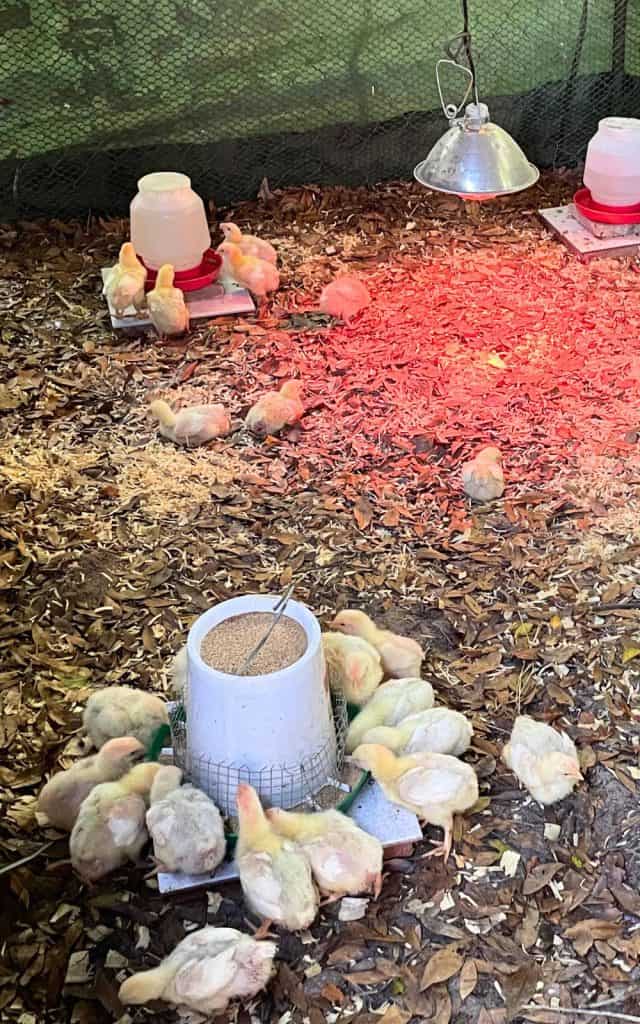
Heat lamps are also flexible in placement. Most heat lamps have a large metal clamp that you secure to a solid object wherever you need to aim the heat.
Cons of Using a Heat Lamp
When using a heat lamp, the biggest risk is fire. Especially if a lamp gets tipped over or knocked down. A brooder is usually full of shavings or bedding that will quickly catch fire. To reduce the risk of fire, it’s a good idea to place a secondary safety chain on your heat lamp to prevent it from falling into bedding should it get bumped.
Using heat lamps means that the chicks are under a light source for 24 hours a day. This leads to an unnatural waking cycle. While chicks will adjust when the heat lamp is removed, it does mean the chicks will be active and awake when you want them to be quiet.
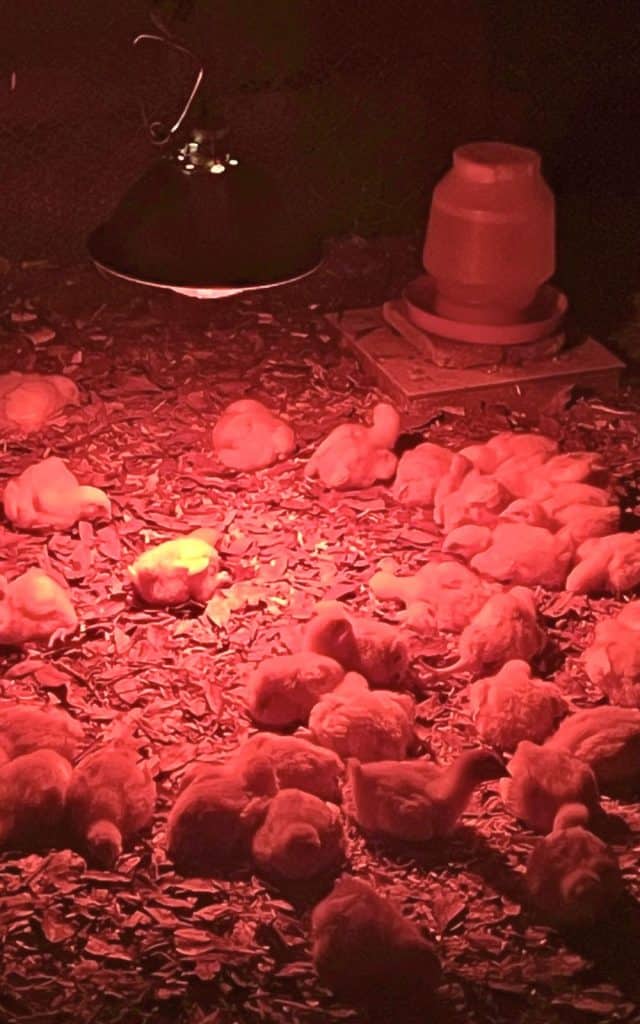
Heat lamp bulbs use a lot more energy, depending on the wattage of the bulb you choose.
The heat is also more intense, and if the lamp is not placed properly or if the chicks are not monitored while they get settled in, the chicks can overheat if they can not get far enough from the heat lamp.
Shop Heat Lamps
- 10″ Heat Lamp: 250-Watt Lamp with Bulb Guard, No Bulb
- Infrared Heat Lamp Bulb: 250-Watt Bulb
Which one is right for you?
Consider these factors when determining whether to use a brooder plate or a heat lamp.
Our Preference
On our homestead, we have always used heat lamps, mostly because we already had them. Brooder heating plates are an investment, especially when you already have the necessary equipment to complete the task. However, I was lucky enough to be given a few different styles. Here are my thoughts after raising several batches of chicks under brooder heating plates.
First Impressions
Our first batch of chicks hatched in early spring. We were still having cooler temperatures down into the 50’s. To ensure my chicks were warm enough, I put the sensor from my remote thermometer under the brooder plate in a plastic bag. When I saw that my day-old chicks were only warming to about 70 degrees, I switched the brooder plate out for a heat lamp right away. I couldn’t risk the chicks chilling down further during the night.
During the rest of that group’s brooder care, I used the brooder plate in the daytime, but switched to a heat lamp at night.
Continued Use of a Brooder Plate
For the rest of the chicks I have been raising this spring and summer, I have used the brooder plate exclusively. The outside temps have been warm enough that the brooder plate did not need to compete with the outside elements, and I was confident my chicks would be warm enough.
While my favorite feature of the brooder heating plate is that it uses significantly less energy, I don’t like that I can’t see my chicks. In one of my more recent groups of chicks, I had a chick die during the night. Had I not moved the brooder plate to check on the chicks, I never would have known that the chick had passed away. I also feel that chicks, especially in colder weather, are more active when under a heating lamp versus a brooder heating plate. The plate requires the chicks to huddle for warmth, rather than eat and play…do chicks play? I guess move around, take sand baths, or explore might be more accurate!
Will I keep using the brooder plates?
Likely yes! When raising chicks, I will choose the heating source that makes the most sense for the season and the number of chicks I am raising. Brooder plates are more energy efficient, and since we live off-grid, being mindful of energy consumption is important.
However, when the weather is cooler, I won’t hesitate to use a more stereotypical heating source that can compete with the elements and keep my chicks warm no matter the season. Additionally, when I order a large batch of chicks, a heating lamp will be more appropriate for large groups. While I can accommodate over 50 chicks with my heating brooder plates, it means running multiple heating plates. When added up, the multiple heating sources are not more energy efficient than just using a heat lamp to get the job done efficiently.
Want to learn more about raising chicks?
Find this post helpful?
Share it on Pinterest

About the Author: Barbra-Sue Kowalski grew up on a small hobby farm. She was always drawn to farm life, however, she was stuck in an urban life far from her roots. Barbra-Sue was a single mom for 13 years, raising her 3 children on her own. She met Philip in 2018 and they married in 2021. Between the two of them, they have 5 grown children and 7 grandchildren. These empty nesters are following their dreams! As they both turn 50, they are building their off-grid homestead to live the life that they dream about. Learn more about Philip and Barbra-Sue here. Contact them here. To leave a comment on this post, please scroll down.




One Comment