
The Real Reason the Pecking Order in Chickens Is Important

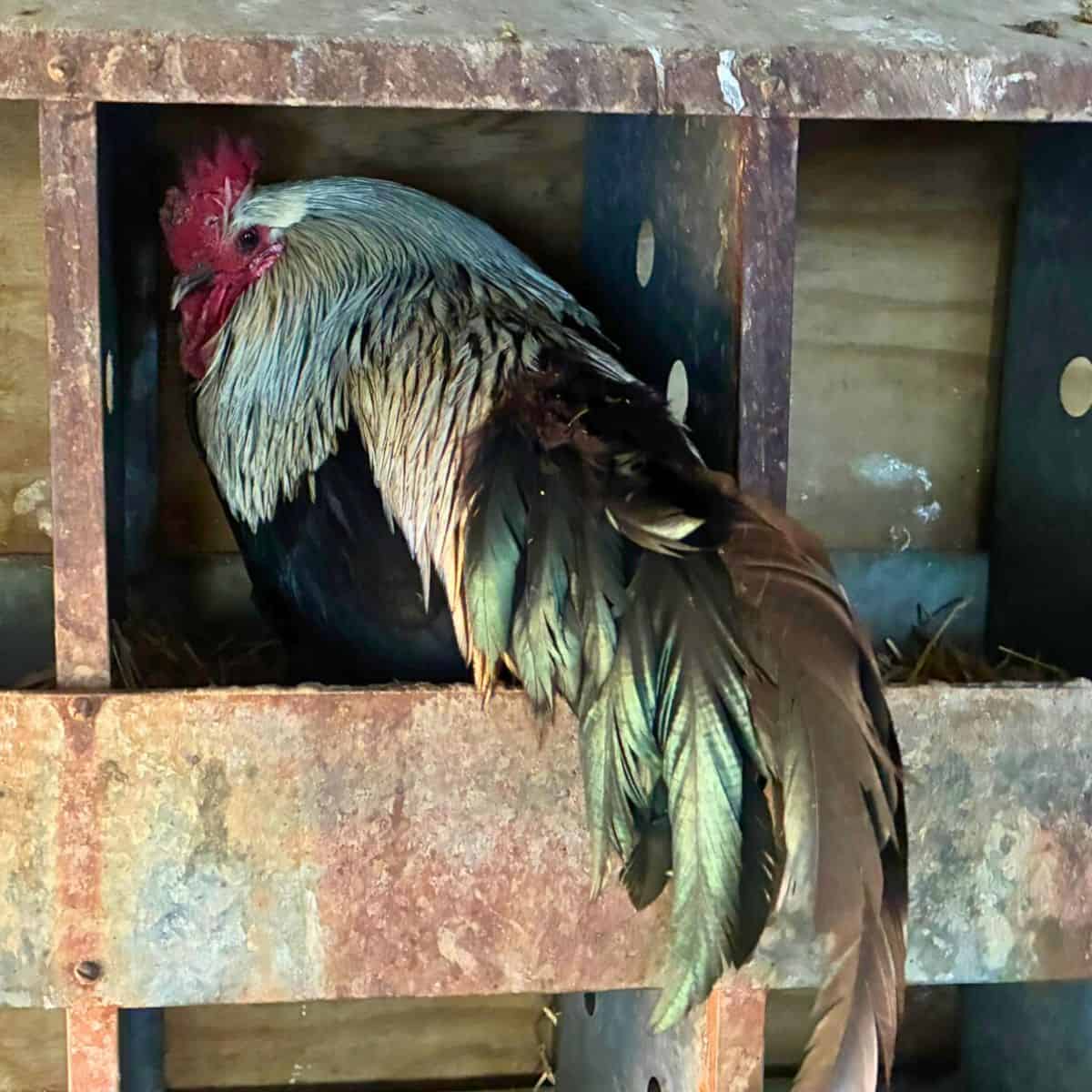
If you’ve ever watched your chickens squabble over food, or chase one another across the yard, you’ve seen the pecking order in action. The pecking order in chickens is a natural hierarchy system that determines rank within a flock of poultry that brings peace and order. As a chicken keeper, understanding how the pecking order works and why it is important can help you spot trouble early, reduce stress in your flock, and create a more peaceful environment for your hens and roosters.
What is Pecking Order?
Pecking order is a basic pattern of social organization in poultry. The term was first used by a Norwegian zoologist, Thorleif Schjelderup-Ebbe. As a child, he became obsessed with a flock of chickens he tended. By the age of 10, he began to document the patterns of behavior of his feathered friends. He would later spend decades studying the dominance hierarchies of domestic chickens and other animals.
Let’s be real, even humans have a social pecking order that we follow. While I’d like to say its not as brutal as chickens, that’s probably not true!
SUMMARIZE & SAVE THIS CONTENT ON
How Does Pecking Order Develop in a Flock?
The pecking order is formed just as it sounds, by pecking. Even in the brooder, young chicks gather around the food dish. One chick pecks his neighbor, and the other runs away. In that moment, the pecking order is established. The chick that delivered the peck has claimed a higher rank in the brooder, while the other chick, out of fear of retaliation, learns not to challenge the dominant bird again.
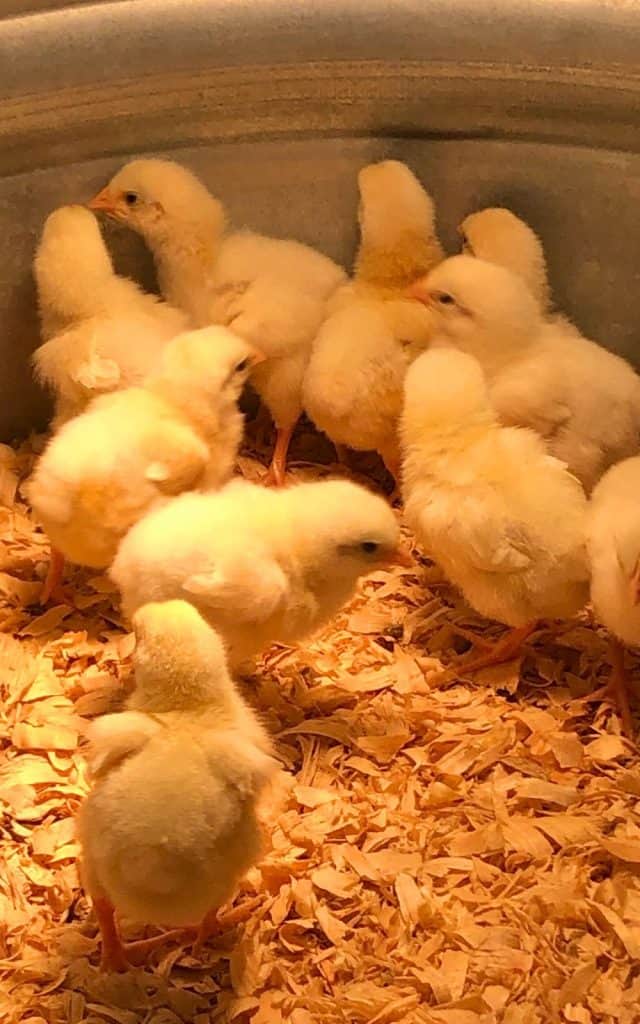
The pecking order can be influenced by age and size. In mixed flocks, older birds are often higher in the pecking order. As birds continue to age, younger and more dominant chickens may challenge the hierarchy in an effort to claim higher ranks. While size can play a role, personality is more often the deciding factor. Bantams can easily rule the roost, regardless of being half the size of full sized breeds.
With a flock of chickens, there is a separate pecking order among the hens and the roosters. The rooster is outside of the pecking order of the hens and can often be a peacemaker among them. Hens may refuse to mate with roosters they deem inferior.
Pecking Order Among Hens
The most dominate hen is the alpha hen. If you keep only laying hens, she will be very prominent. She’s the lead hen who rules the roost! In flocks that do not have a rooster, the head hen is the caretaker of the group. She will be watching for danger and leading the way to discover food or treats. In my large mixed flock of both roosters and hens, she is less prominent, since the rooster takes a protector role. However, be assured, the hens all know who she is. The hens highest in the pecking order eat first, choose the best places to roost first, and their favorite nesting boxes.
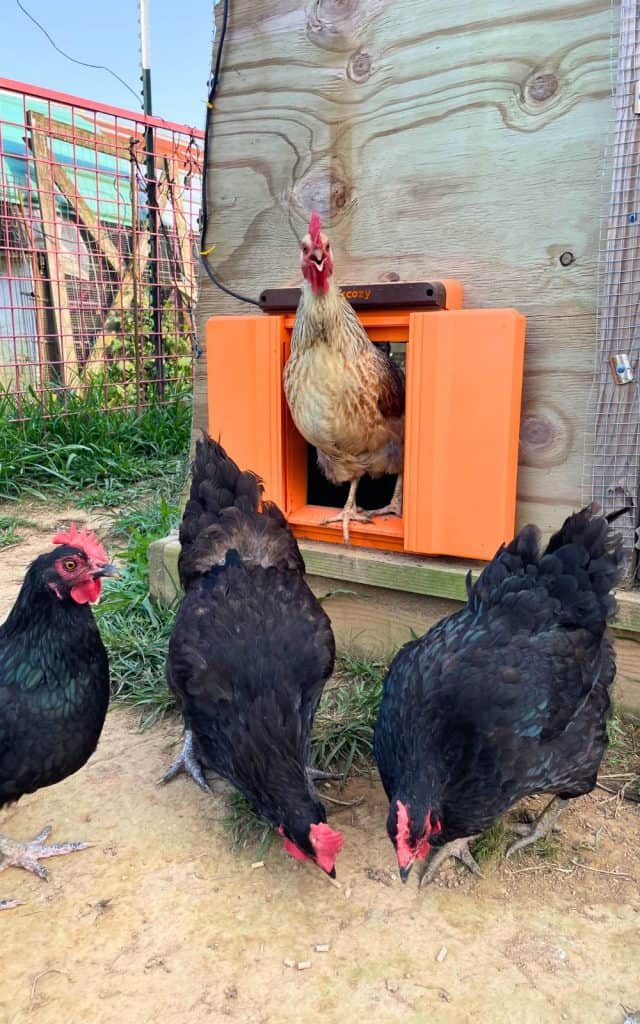
The hens at the bottom of the pecking order will be noticeable. While they may the first to arrive when treats are given out, they quickly relinquish the treats when birds higher in the pecking order arrive. They will eat last, and will be seen scurrying away if they dare try to overstep their place. They will roost on the lower rails, or less comfortable locations in the hen house.
Hens in the middle of the pecking order often lead the most comfortable, low stress lives. While they are not at the top, they are also not singled out like the birds at the bottom. These middle ranked chickens avoid constant harassment and may even assert themselves over lower ranked flock members when needed.
Pecking Order Among Roosters
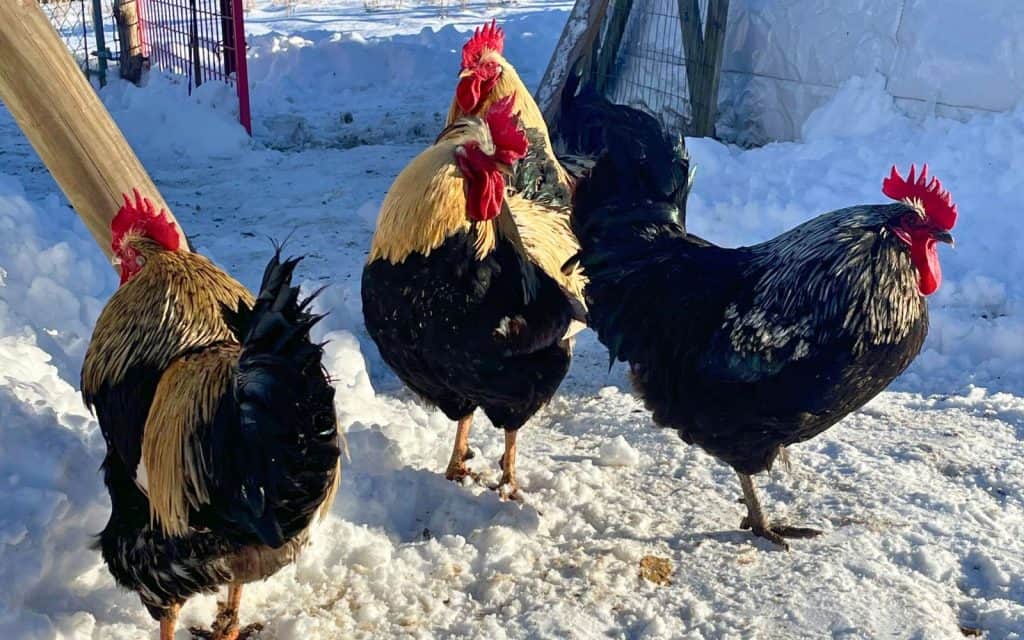
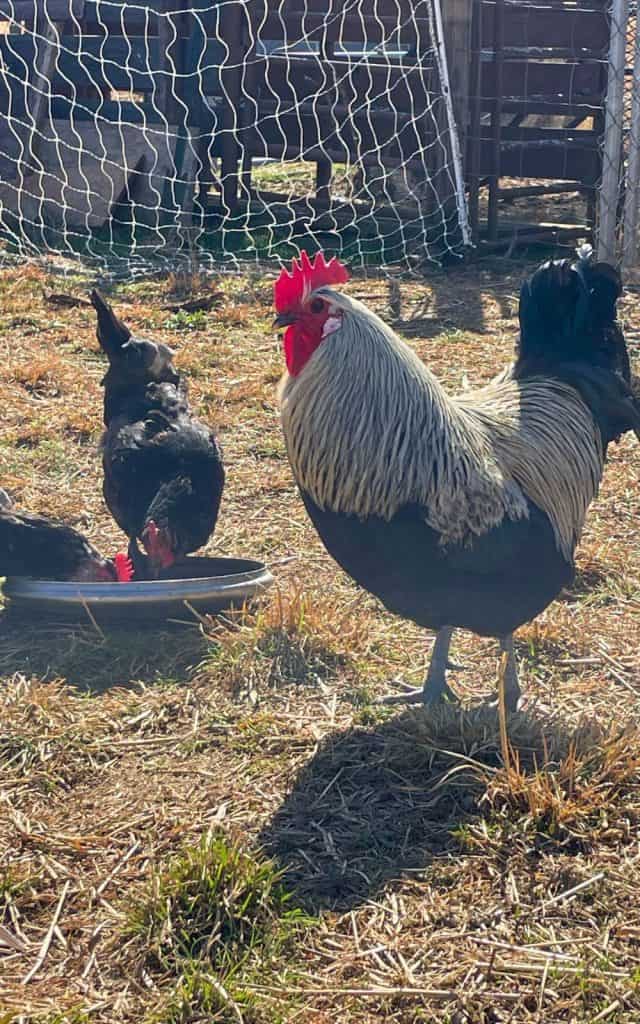
Roosters are not a part of the hens pecking order. In a flock of chickens with only one rooster, he will act as a protector and mediator. In flocks with multiple roosters, there is a pecking order among the roosters. The most dominate rooster is the alpha. He gets his choice of hens. Should another rooster try to mate with a hen that the alpha deems his, he will run the other rooster off and most usually mate with the hen, showing the entire flock who’s the boss.
Pecking order among roosters begins in the brooder. If your chicks are hen raised among the flock, the hens will teach the chicks about the pecking order. Cockerels raised in a flock of chickens will be much more accepted into the flock because they respect the pecking order early on. While ratios of roosters are extremely important to provide peace in the chicken coop as the cockerels mature, the fighting common among adult roosters will be less.
We raise American Bresse chicks here on our homestead, even when hatched in the incubator, if I can sneak the chicks under a broody hen who will raise them, the chickens will be much easier to integrate into the flock. The young cockerels raised for meat can often remain with the flock for a much longer time period than brooder-raised cockerels.
Pecking Order in Large Flocks
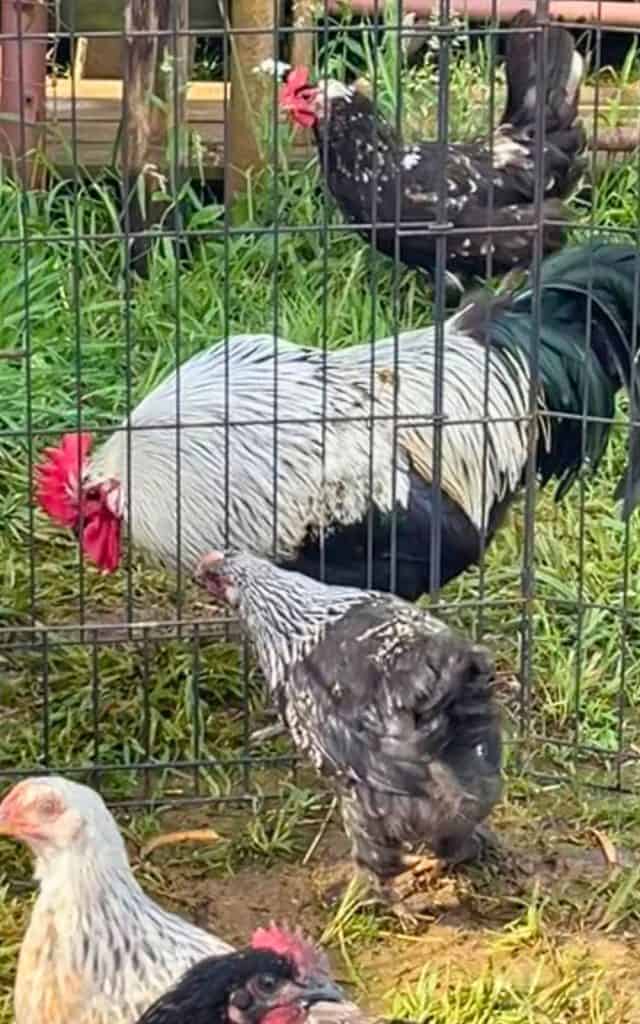
In large flocks of chickens with multiple roosters, there is a distinct alpha rooster and a lead hen. Within the larger group, smaller flocks may also form. Lower-ranking roosters will often associate with hens that do not challenge their position, creating quieter subgroups within the flock and reducing constant conflict.
In my large flock of about 40 hens, I was reducing the rooster ratio to only 3 birds. I wanted to integrate two new roosters from my rooster flock into the main group. The rooster at the bottom of the pecking order was a sad sight. He often would skirt around the far edges of the hens as they free ranged. However slowly, overtime, he gained a small following of hens. He would lead them to food, keep a watchful eye over them, but he respected the alpha rooster by leaving his choosen hens alone.
Supporting a Balanced Flock
One the best things you can do to keep a balanced flock is to provide the chickens with adequate space. Laying hens require 3 to 4 square feet of indoor space per hen, with an additional 10 square feet per hen in outdoor space. We allow our chickens to free range most of the time, which is extremely helpful when chickens are trying to work through a new pecking order amongst the flock.
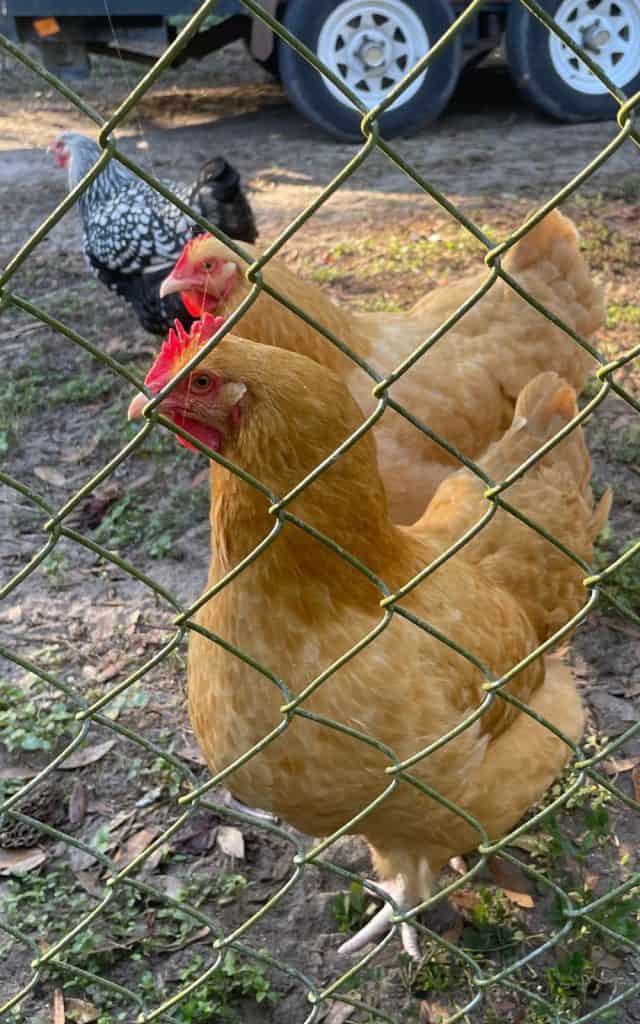
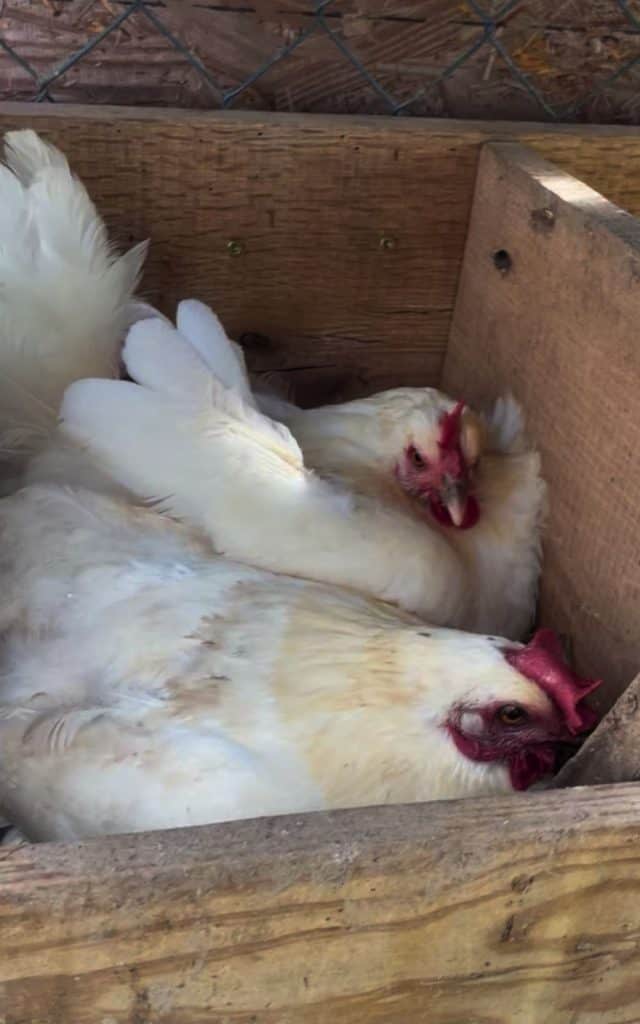
Additionally provide enough nesting boxes to support your flock. Laying eggs takes time! You will need one nest box for every 3 to 5 laying hens. While I know that there will be favorite nesting boxes that the chickens will line up and even pile in to try and lay their eggs, you will want to provide enough boxes to allow sufficient choices.
Provide multiple feeders and waterers within your large flock. While there will still be pecking order squabbles at the feeders, the birds can spread out and reduce stress during meal time. Chickens at the bottom of the pecking order will eat last after the higher-ranking birds have had their fill so make sure there is adequate food for everyone.
Adequate roosting space is essential. In our flock, we like to provide multiple roosting bars at the same height that allows every bird to feel safe. However, in roosting areas where the bars are at different heights, the higher ranking chickens will choose usually the higher roosting bars. Lower-ranking birds will be left with whatever space is left over.
Disruptions to the Pecking Order
Pecking order within a flock can be disrupted by changes in the chicken coop. Often, the alpha birds will retain their place within the flock.
Your Roll in the Pecking Order
Believe it or not, you are a part of the pecking order within your flock. This can easily be seen when you head out into the barnyard. Do your chickens come running, looking to see what you have? While the chickens may be curious about visitors or even other family members, they won’t have the same enthusiasm they do when their tall, two-legged friend enters the yard.
Some birds may try to challenge your role in the flock by attacking. If a bird tries to attack you the best thing to do is to hold the chicken down like a rooster would hold a hen in mating. This is a behavior of submission that the birds understand. Personally I don’t mess around with mean chickens. I will try to correct the behavior but if it continues, the bird become soup!
The Hard Reality of Pecking Order
It can be hard to watch your favorite chickens navigate flock pecking order. My favorite rooster, a Black American Bresse rooster I named Chanticlear, had been the alpha within my flock for several years. He was an attentive rooster. Watchful of the flock, generous with his hens and gentle around my grandkids. However, he was clearly the alpha. He killed two young cockerels during the integration process. While this is unfortunate, I understood the dark side of pecking order. He wasn’t a mean rooster, even among the other roosters in the flock, and unfortunately even under the best transition plan, chickens can be brutal.
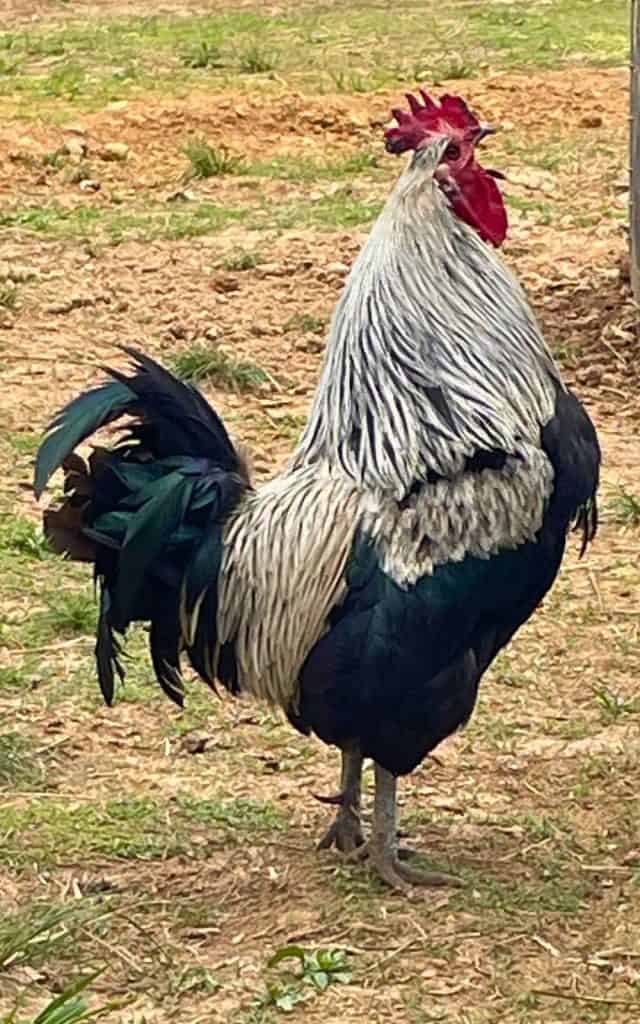
Chanticleer is getting older; he is the oldest bird in my flock. I had already planned to butcher him when we butcher our next group of birds. However I was heartbroken when I realized he had been overthrown in the pecking order.
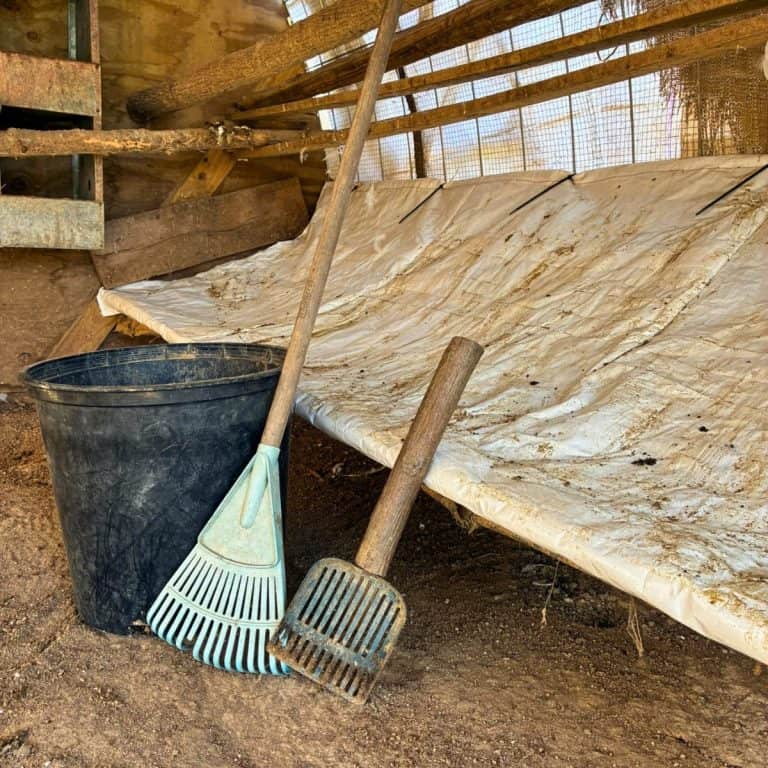
My regal, protective, gorgeous rooster was hiding from the flock. I found him soaking wet on a cold day trying his best to find shelter from the wind but he wouldn’t return to the coop. He hunted for food alone, no hens coming to check out the treats he attempted to share. He had a small group of hens still loyal, but the remaining roosters challenged him at every turn. When the winter temperatures plummeted and the chickens were restricted to the coop, Chanticlear hid under the poop hammock and in the nest boxes. I knew he had been overthrown when I found him roosting on the overflow roost all alone. No longer on the main roosting bars with the group.
An Overthrown Leader
Interestingly enough, it wasn’t one bird that overpowered him. I had been limiting my main flock to 3 roosters, but I had a large-bodied chicken that I had mistaken as a pullet. These big birds mature slowly, and I suspected he might be a cockerel, but unlike standard chickens, the comb and feather development is much slower. By the time I was sure he wasn’t a pullet, it was too late to integrate him into the rooster flock where he would certainly be killed. This young bird had been successfully integrated into the flock for months. My flock is large and able to support four roosters. I made a mental note to add the cockerel to the cull list when we butchered the rooster flock.
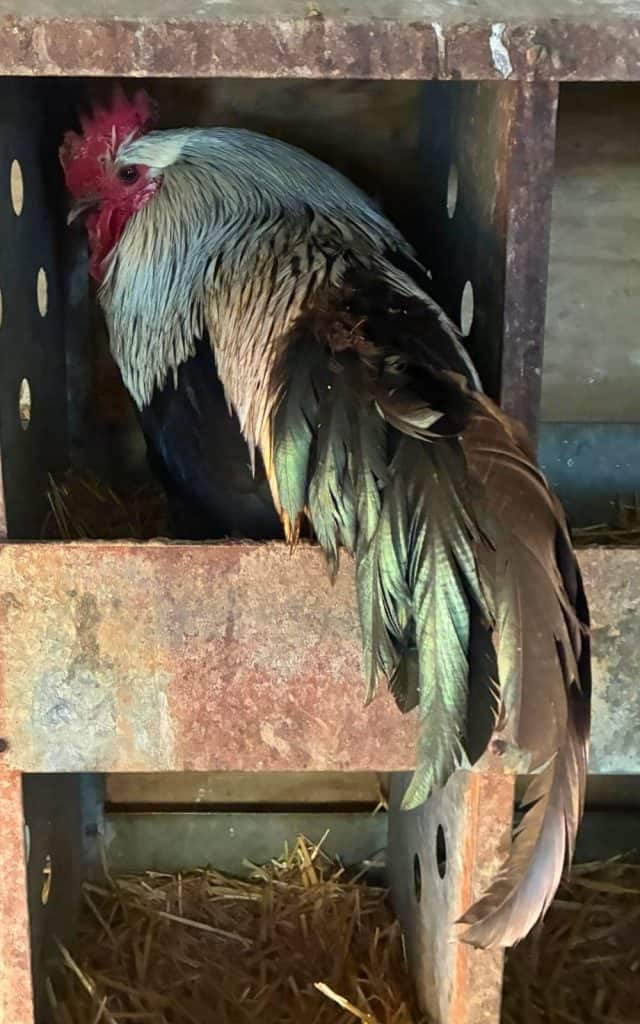
That young cockerel challenged Chanticleer. He is much larger and eventually he must have won a battle. Shortly after the remaining roosters who had been peacefully living under the leadership of Chanticleer for more than a year all turned on him. Each one took advantage, and they successfully overthrew him. That young cockerel did not become the alpha rooster, but his disruption in the pecking order made way for another rooster to take the alpha postion.
What to Do When the Pecking Order Is Out of Balance
Pecking order is a necessary part of flock life. Chickens will squabble and all-out fight, but usually with time and space, the chickens will work it out themselves. Free-ranging is one of the best things you can do for birds that are struggling with pecking order disruptions. Make sure that their needs are met with plenty of food, roosting space and room to roam.
Birds that are seriously injured should be cared for and safely separated in a dog crate. I like to keep the crate within the coop so that my recovering bird remains a member of the flock. Segregation allows them time to heal without being picked on, and keeping them close allows for easy reintegration back into the flock.
Why Pecking Order Matters?
The pecking order in chickens is not about cruelty. It is how a flock provides a stable and safe living environment for the entire flock. When each bird knows its place, there is less fighting and less stress overall. Problems start when that balance is disrupted, whether from adding new birds, losing a leader, or changes in the coop. Understanding how the pecking order works allows you to recognize trouble early and make changes that support a calmer, healthier flock.
Find this post helpful?
Share it on Pinterest
FAQ
The pecking order in chickens is a natural hierarchy system that determines rank within a flock of poultry that brings peace and order. Within mixed flocks, hens and roosters have a seperate pecking order.
Oh yes! It literally involves pecking! If you’ve ever watched your chickens squabble over food, or chase one another across the yard, you’ve seen the pecking order in action. Each chicken has a place within the flock’s pecking order that determines their place. Higher ranking chickens eat first, get the best roosting spot and choose thier mates. Chickens at the bottom of the pecking order wait until the others take their turn. This actually brings order to the flock, no free for all, it’s an orderly system but it does involve competetion to determine each chickens place.
Chickens earn their rank in the flock by pecking at other chickens. When a chicken pecks his neighbor at the feeder, and the pecked chicken runs away, the chicken doing the pecking earned a higher rank within the flock.
Most of the time is looks like bickering. However, it can be much more intense. In extreme situations it can lead to injured animals and even death due to fighting. The chickens need to work through the bickering to learn their place, when the situation intesifies you may need to intervene to prevent loss of life.

About the Author: Barbra-Sue Kowalski grew up on a small hobby farm. She was always drawn to farm life, however, she was stuck in an urban life far from her roots. Barbra-Sue was a single mom for 13 years, raising her 3 children on her own. She met Philip in 2018 and they married in 2021. Between the two of them, they have 5 grown children and 7 grandchildren. These empty nesters are following their dreams! As they both turn 50, they are building their off-grid homestead to live the life that they dream about. Learn more about Philip and Barbra-Sue here. Contact them here. To leave a comment on this post, please scroll down.




One Comment