
How to Choose the Best Mason Jars for Canning

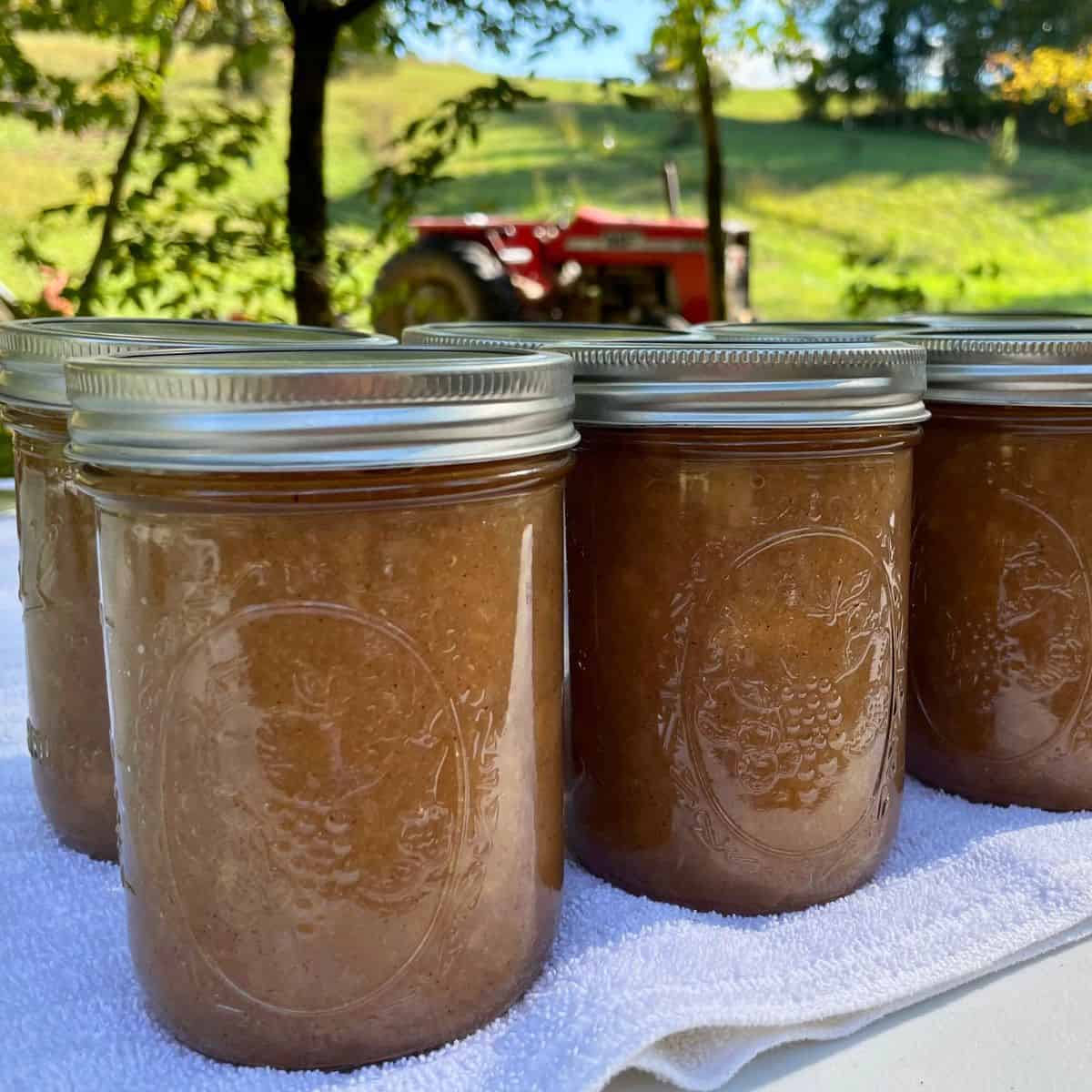
When it comes to home food preservation, most home cooks are familiar with the most common sizes of canning jars. However, several types of canning jars are available. Each jar is designed for specific foods, batch sizes, and storage needs. Selecting the correct jar means preparing your food in the best jar sizes to meet your family’s needs. In this post, we’ll cover the common sizes and their best uses to help you pick the perfect jar every time.
History of the Canning Jar
Canning jars as we know them were invented by John Landis Mason in the 1850s. He designed a jar with threaded screw-top lids. Then he used a rubber seal and a flat metal lid to make the jars air-tight. Before his invention, food was canned in glass jars and sealed with wax, a laborious and messy task! He sought a patent for his threaded jars in 1858. These canning jars revolutionized home canning! Within 10 years, the custom of sealing jars with wax was no longer necessary. In 1884, after Mason’s patent expired, Ball Corporation, founded by the Ball brothers, licensed Mason’s design.
Canning jars use a two-piece lid system to seal the jars. In past decades, each jar had a reusable rubber ring. Mason’s original design had a zinc metal lid, but it often left the food with an off taste. Some canning jars used glass lids with a rubber seal instead.

Modern canning jars have a few options for canning jar lids. Most popular are one-use self-sealing lids with the sealing compound adhered to the inside rim of the metal flat. The USDA and canning jar companies recommend that metal flats can only be used once. Therefore, plan to purchase a supply of new lids every year. Reusable food-safe plastic canning lids are available with a separate rubber seal. The most popular companies are Harvest Guard and Tattle, both are approved by the USDA. Weck jars are also reusable, using a glass lid with a rubber seal. While they are available worldwide, they are most popular in Germany and Europe.
Styles of Canning Jars
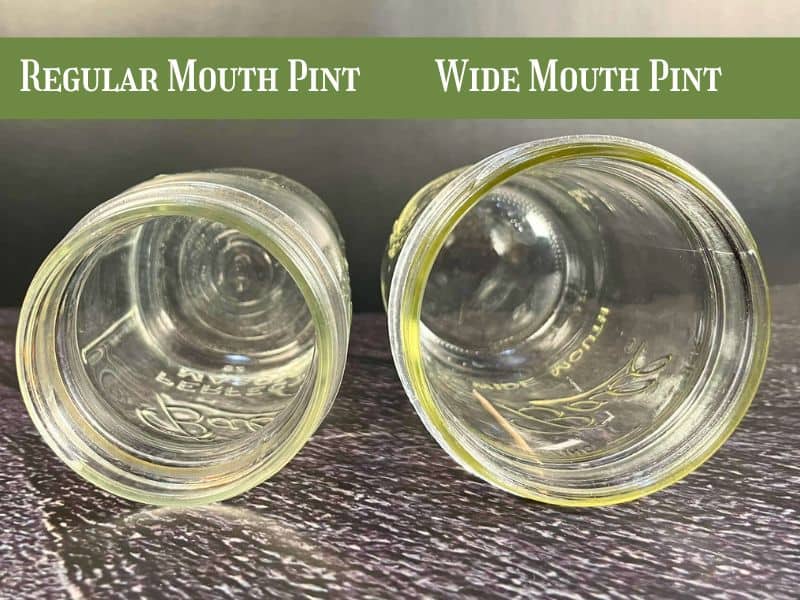
Mason jars come in two main styles: regular mouth jars and wide-mouth jars. Regular mouth jars have a narrower opening, most similar to John Mason’s original design. The jar opening has an outside diameter of 2 3/4″ across. Wide-mouth jars have a wider opening with an outside diameter of 3 3/8″.
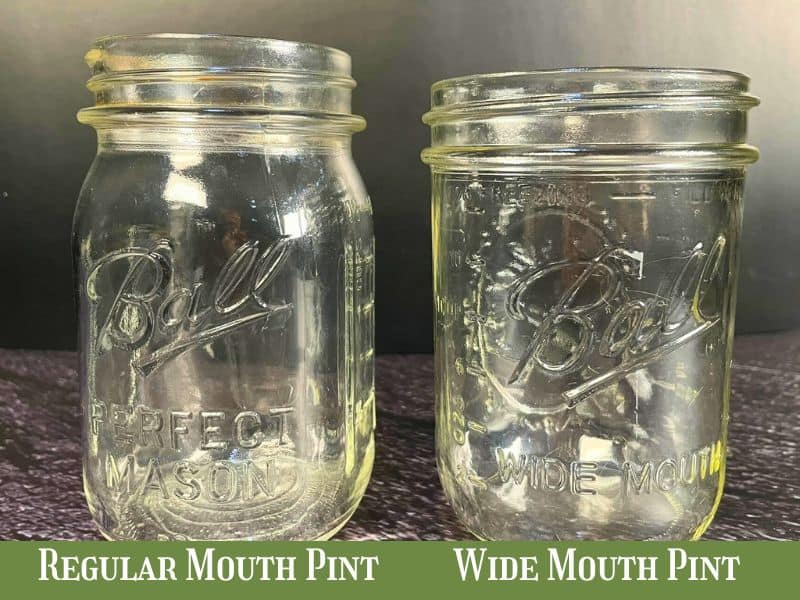
Regular mouth jars tend to be less expensive, but in my opinion, they are less user-friendly. Depending on what you are canning, they are harder to fill, but more importantly, they are harder to wash. I can fit my hand easily into a wide-mouth jar to wash it well. However, a standard jar mouth opening requires the use of a bottle brush to wash jars on the inside. While I NEVER pass up free canning jars, if I am purchasing canning jars, I always choose wide mouth jars.
Want to learn more about food preservation?
YES, you can safely preserve food at home!


A Jar for Every Use
The best thing about canning jars is that they come in various sizes to meet every need possible. Even if you don’t want to use canning jars for home preservation, they make the perfect storage jars for a wide variety of foods. We use them for home preservation, the storage of dry goods, and food storage in the refrigerator.
Quarter Pint Jars
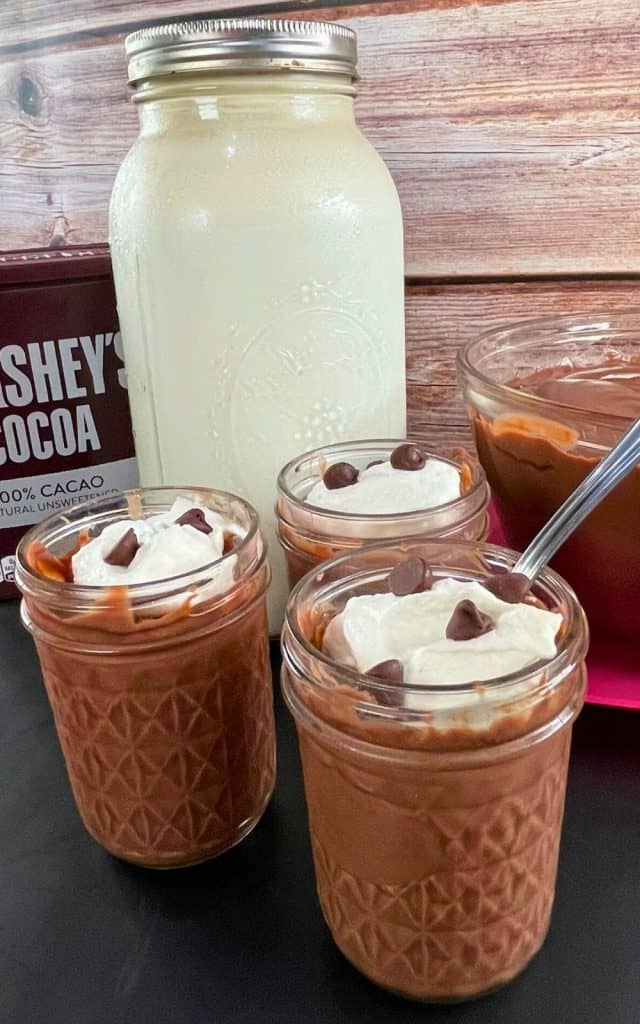
The smallest available canning jar is the quarter-pint jar. It holds 4 ounces. This measurement is based on filling the jar to the very rim of the glass jar. For most canning projects, you would fill them at least a 1/4″ less, but the headspace may be even more, depending on what you are canning. Most commonly, they are used for jams and jellies. They are perfect for small batches or sharing homemade canned goods with friends. Often, they come with a pretty quilted pattern on the glass called decorator jelly jars, making them perfect for gifting. These small jars are ideal for small batches of foods that you don’t use often. Some specialty condiments, like cowboy candy or fancy relishes, may be used infrequently. These smaller portions mean that none of your home-canned goods are wasted.
Outside of canning, they are perfect for single servings for children or organizing office supplies.

Half-Pint Jars
Half pint jars are the next smallest jars, holding 8 ounces. They are often called jelly jars because they are the perfect size for homemade jams and jellies. Jelly jars have straight sides and are the perfect height for a butter knife to reach the bottom. The design ensures that you can easily reach every delicious bite! Since the jar has no shoulders, there is never any jam hiding just under the rim of the jar out of reach. Half pint jars also come in wide-mouth. They are wide, short jars. While they still make these jars, I find them less frequently in stores, but they can be purchased online.
Jelly jars are nice for relishes, pickled vegetables, and pizza sauce. I find that a jelly jar holds enough pizza sauce for two pizzas with light sauce. If you like heavy sauce, a pint would serve your needs better. One of the best parts of canning your homemade foods is that you can package them exactly the way you use them. Using the right jar ensures your food never gets wasted!

Pint Jars
One of the most commonly used sizes of home-canning jars is pint jars. Pint jars hold 16 ounces, but remember that’s to the rim of the jar. Many foods in these jars leave a 1/2″ to 1″ headspace. They are easy to find in almost every box store and grocery store. Pint jars come in both wide-mouth and regular-mouth jars. If you do a lot of home preserving, pint jars will be one you want to stock up on! Pint jars are perfect for canning vegetables, fruit, salsa, pickles, and broth. Since Philip and I are empty nesters, we use pint jars often for some foods that larger families typically use a quart jar.
I like to preserve my applesauce in pint jars, fruits such as peaches, and even potatoes. I preserve most of my meats in pint jars. A typical pint jar holds about 1 pound of meat, which is perfect for just the two of us.

Canning Jars Shopping Guide at a Glance
|
Types of Canning Jars |
Ounces |
Regular-Mouth Lid |
Wide-Mouth Lid |
|
4 ounces |
YES |
NO |
|
|
Half-Pint Jar (Jelly Jar) |
8 ounces |
YES |
Limited Availibity |
|
16 ounces |
YES |
YES |
|
|
24 ounces |
Limited Availability |
YES |
|
|
32 ounces |
YES |
YES |
|
|
64 ounces |
NO |
YES |
Pint and a Half Jars
My absolute favorite jars are the pint and a half. This canning jar holds 24 ounces and typically comes only in a wide-mouth option. Oftentimes, a pint is not quite enough, but a quart is too much. A pint and a half is just right! This jar is the perfect size for sauces, vegetables, and soups. Taller items like pickles and asparagus fit perfectly in a pint and a half jar.
Ball has discontinued selling pint-and-a-half jars. They were difficult to find and soared in price! However, they are making a comeback. Azure Standard offers them at a great price. While I never like to break any of my canning jars, breaking a pint and a half jar is devastating! They are my favorite go-to canning jars for most of the foods I can.

Quart Jars
Quart jars are the other most common size of canning jars. They hold 32 ounces. This jar is a standard size jar for larger families. It’s perfect for families who need a larger portion size of fruits, vegetables, and even meats. They hold approximately 2 pounds of meat in a single jar. Quart jars are perfect for canning tomatoes, potatoes, whole and half-sized fruits. We also use quart jars to store our maple syrup. It’s a good-sized jar that stores easily in the fridge. Families that need a larger serving of sauces, broths, and soups may prefer quart jars as well.

Quart jars are more economical. Quart jars typically only cost a couple of dollars more than the same number of pint jars, but they hold twice as much food. Our Amish neighbors can everything in regular mouth quart jars because the jars and lids are the most economical way to buy both the jars and the lids.
Half Gallon Jars
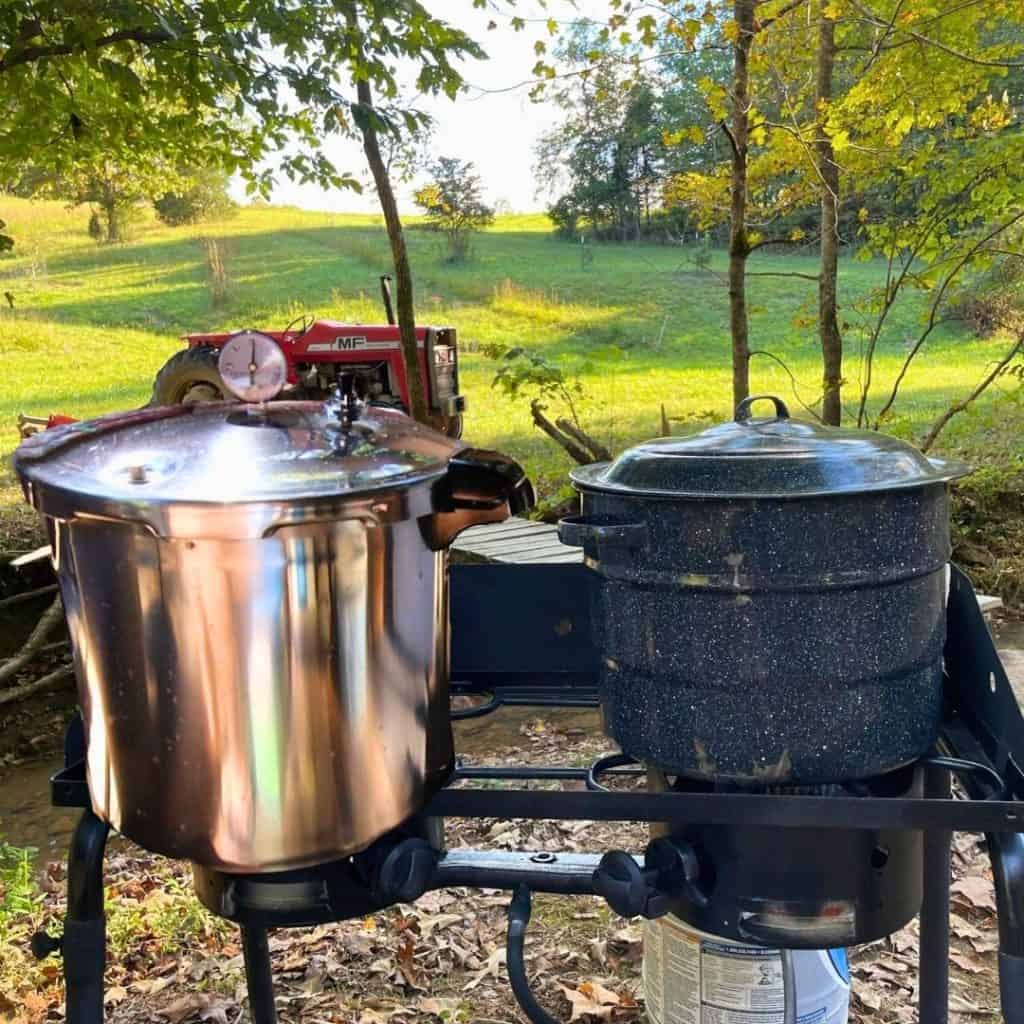
Half-gallon jars are the largest jars made by most canning jar suppliers, which are intended for preservation. They hold 64 ounces. Half-gallon jars are recommended for canning only high-acid foods such as grape juice or apple juice. These jars can only be processed in a water bath canner, as most pressure canners are not tall enough to accommodate a half-gallon jar. We use a lot of half-gallon jars for non-canning purposes. They are the perfect size jar to quickly chill raw milk. They are also the perfect size for dry storage for things like rice, pasta, and raisins. I also like amber colored half-gallon jars to store loose-leaf teas.

Common Questions about Canning Jars
Now that you are familiar with the types of canning jars available and how you might use them, let’s look at some common questions.
Does Brand Matter?
While I am not typically concerned about labels, when it comes to brand names, I believe that purchasing brand-name canning jars DOES matter. Typically, I purchase Ball canning jars, though I have never had any problems with the Kerr canning jars I have been given. Azure Standard released a line of canning jars this past year, and the reviews have been very positive. Always one to wait for a deal, I am watching them closely for a sale!
Outside of these name brands, I don’t purchase other canning jars. Many are made with thin glass and are more prone to breakage. Some brands make jars specifically for water bath canning, stating right on the box that they are not intended for the high heat of pressure canning. I avoid these jars at all costs, as there is no way I could keep up with what jars are safe for pressure canning and which are not.
Are All Canning Jars Processed the Same?
No, when processing your home-canned goods with by water bath canning or pressure canning, different types of canning jars have different processing times. Most recipes are based on pint and quart jars. If you are processing jars that are not listed, such as pint and a half jars, always round up to the larger jar size. The processing time for a pint and a half jar is the same as a quart jar. Quarter pint jars are processed the same as half pint jars.
Can I use mayonnaise-type jars for canning?
Surprisingly, I even read in the Complete Guide to Home Canning published by the USDA that some jars, such as spaghetti sauce jars, salad dressing jars, or mayonnaise jars, can be used for water bath canning. Be aware that they are more prone to jar breakage. While we reuse these types of canning jars for dry goods, I personally don’t reuse them for home preservation. These types of jars we reuse for dry storage.
Can I use antique canning jars?
While vintage and antique canning jars can be used for decoration or dry food storage, the USDA does not recommend that they are used for home canning. Still some people do use older glass canning jars after fully inspecting the rims and jars for any cracks or flaws. I was surprised to read that canning jars have a lifetime of about 10 to 13 years, and while they can still be used beyond that point, they will be more prone to breakage. This is one of those areas that every home cook needs to decide for herself what her risk level is and if she can deal with the consequences of lost food from glass breakage.

Find this post helpful?
Share it on Pinterest

About the Author: Barbra-Sue Kowalski grew up on a small hobby farm. She was always drawn to farm life, however, she was stuck in an urban life far from her roots. Barbra-Sue was a single mom for 13 years, raising her 3 children on her own. She met Philip in 2018 and they married in 2021. Between the two of them, they have 5 grown children and 7 grandchildren. These empty nesters are following their dreams! As they both turn 50, they are building their off-grid homestead to live the life that they dream about. Learn more about Philip and Barbra-Sue here. Contact them here. To leave a comment on this post, please scroll down.


One Comment