
Tallow Balm: The Natural Skincare Upgrade You Need Now

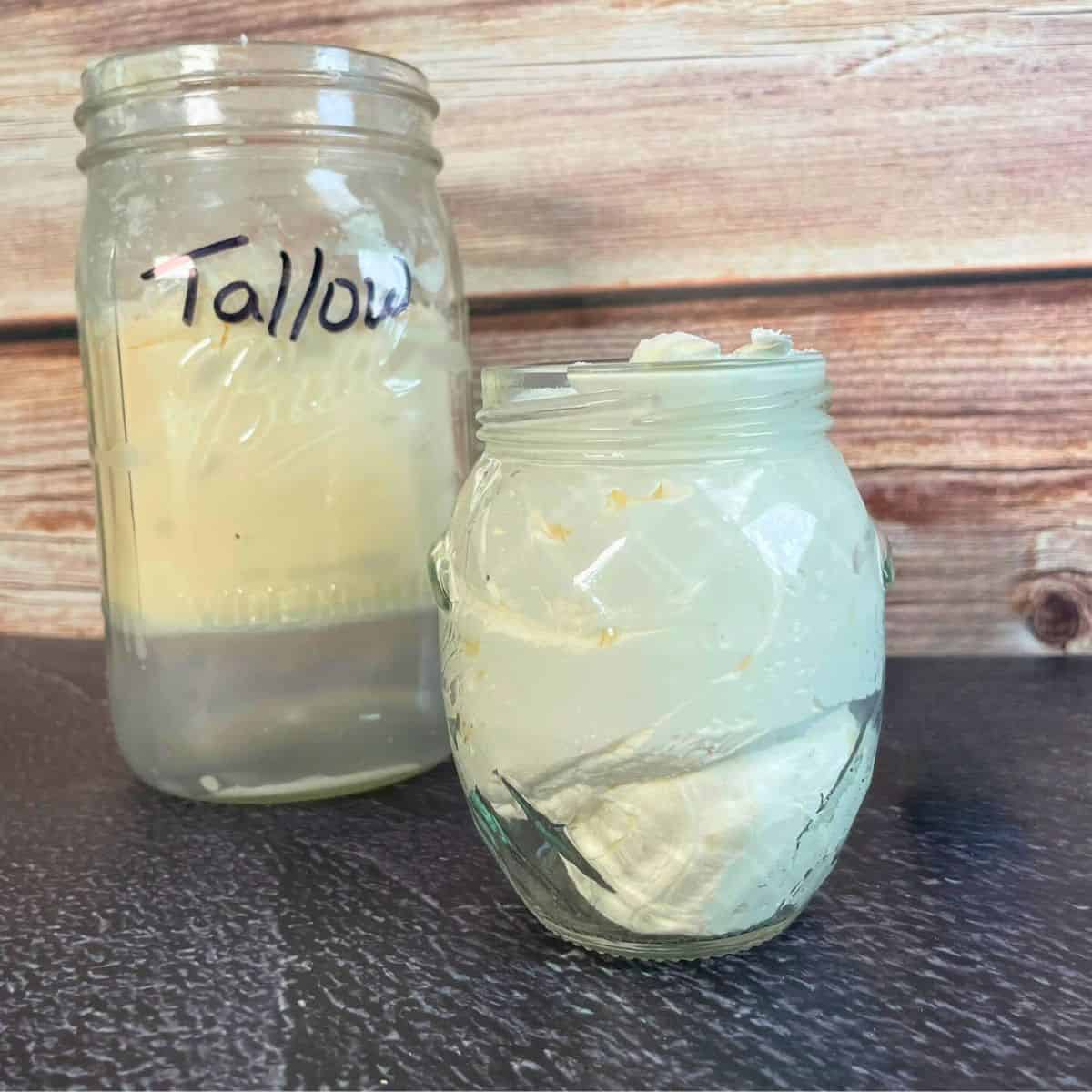
If you are looking for a moisturizer made with natural ingredients, you’ve likely considered tallow balm. While the use of animal fat has become more popular in recent years, tallow has been a go-to ingredient in traditional skincare for centuries. Similar to the composition of the human skin and rich in vitamins and essential fatty acids, tallow is the original balm used to soothe and hydrate dry, chapped skin.
Most commonly made from beef tallow, tallow can also be rendered from deer, sheep, and other hoofed animals. For years, I paid a premium price to include beef tallow balm in my skincare routine. I was thrilled to learn that I could make my own natural skincare balm from the rendered fat of the deer my husband harvests each fall.
What is deer tallow balm?
You may be familiar with beef tallow balm products. Beef fat is a renewable, widely available resource. Grass-fed beef tallow is the most widely sought, since the grass fed animals have not been fed questionable ingredients that make their way into the fat that is rendered into tallow.
Deer tallow is simply tallow that is made from rendered deer fat. Wild deer live off the land, browsing for only the best forage they can find. Deer are less fatty than domesticated animals, but most deer, especially does, have some fat that can be preserved by rendering.
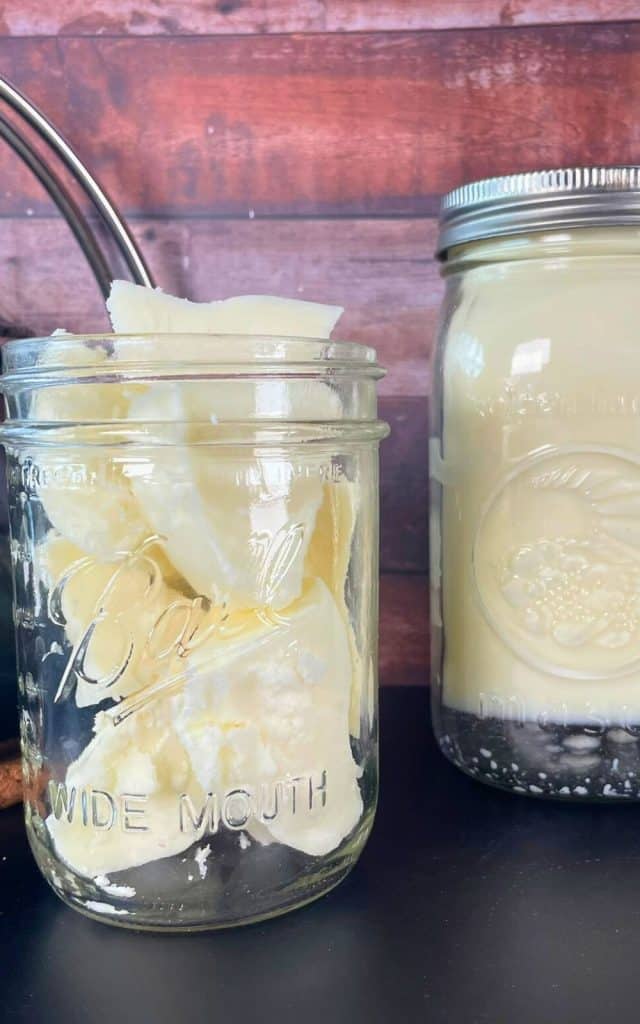
Here on our Kentucky homestead, we are allowed to hunt multiple deer each season, which allows us to save the fat from multiple deer to produce enough tallow for soap making and my whipped tallow balm moisturizer to last the year (or two).
Why is deer tallow good for your skin?
Tallow is very similar to our own skin’s composition, making it the perfect solution for pure skincare. Tallow is a rich source of fat-soluble vitamins and fatty acids.
Vitamin A helps with skin turnover and regeneration. It plays an important role in your skin’s ability to repair itself.
Vitamin D helps fortify the skin barrier, boosting its strength and flexibility.
Vitamin E is an antioxidant that helps protect your skin from external damage and free radicals. Free radicals can cause premature aging and many health issues.
Vitamin K works with the other vitamins to help the skin heal and recover from bruising and irritation. It strengthens the skin’s natural barrier.
Fatty acids in tallow include oleic acid, palmitic acid, stearic acid, and linoleic acid. They provide hydration and help to lock in moisture by reinforcing the skin’s protective barrier.
Deer Tallow Balm Versus Store-Bought Skincare Products
Using natural products, like tallow balm, is perfect for all skin types, especially those with sensitive skin. Store-bought skin care products are full of harsh alcohols and surfactants, heavy oils, and waxes. Additionally, harsh essential oils and synthetic fragrance are added for sensory appeal, but can be irritating to your skin.

People with all skin types can benefit from the customizable formula made in small batches right in your kitchen. Since tallow is solid at room temperature, it is mixed with other natural oils to soften the tallow balm to make it spreadable. You can experiment with different blends of tallow and your choice of clean oils that are liquid at room temperature. Olive oil, argan oil, rosehip oil, almond oil, jojoba oil, and avocado oil are popular choices.
Making tallow balm yourself is highly economical. You will be shocked at how little it costs to produce your own whipped tallow balm. Even if you purchase grass-fed tallow, you will save a significant amount.
How do you render tallow for skincare?
Unlike highly processed plant oils, tallow is rendered at low temperatures. Rendering is the process of cooking perishable game fat down to make it shelf-stable. When rendered properly, no preservatives, chemicals, or fillers are needed. When rendering tallow for skin care products, I use both wet and dry rendering processes to produce a clean and low-scent tallow.
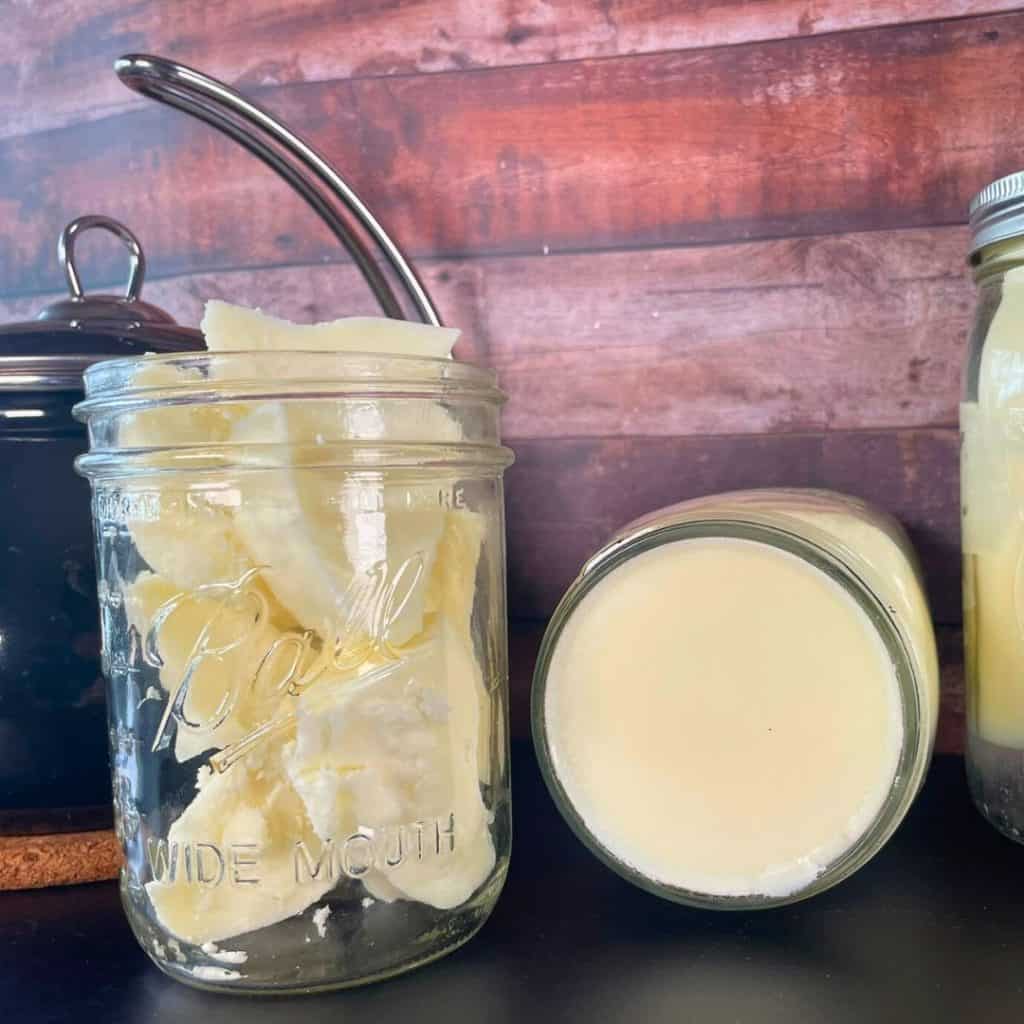
Rendering 101: Everything You Need to Know
Want to learn more about rendering your own fats? What’s the difference between wet rendering and dry rendering? Which method should I choose? This post goes through the entire process start to finish!
Whipped Deer Tallow Balm Recipe
This recipe is a starting point for your unique blend. I use a 4:1 ratio of tallow to oil in my whipped tallow balm. This balm will have a thicker consistency like body butter; it is less light and airy. If you want a lighter tallow balm, you can adjust this formula to 3:2.
Ingredients You’ll Need
8 ounces
deer tallow
2 ounces
liquid oil of your choice: Olive oil, argan oil, rosehip oil, almond oil, jojoba oil, or avocado oil
1 teaspoon
Vitamin E oil (optional)
2 teaspoons
Arrowroot powder (optional) Use this if you find the texture of the balm leaves a greasy residue.
25 drops
Skin-safe essential oils: lavender, tea tree, frankincense, chamomile, bergamot, sandalwood, cedarwood, rosemary, and geranium are popular choices. (25 drops is approximately 1/4 teaspoon)

Equipment Needed
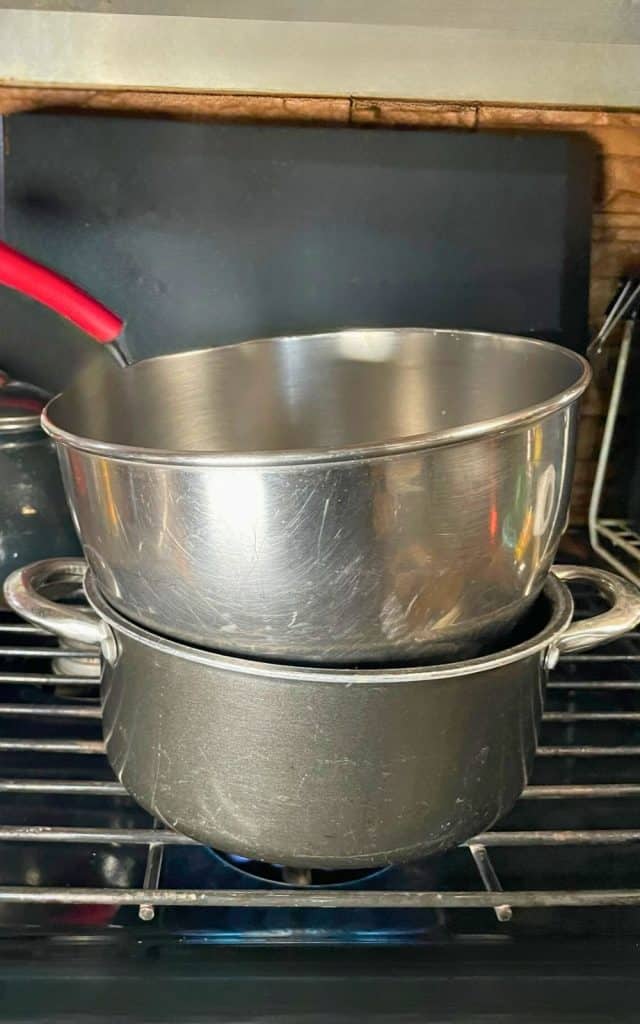
Don’t have a double boiler? Make one with a large pot and an additional metal pot to fit on top.
How to Make Whipped Tallow Balm
Add water to your double boiler and bring the water to a boil. Place your oil bowl to the double boiler while the water heats. Gently melt 8 ounces of tallow until just melted; don’t overheat.
Add 2 ounces of your choice of liquid oil and 1 teaspoon of vitamin E (if using), stirring well.
If you are using essential oils, add them while the oils are melted to blend them thoroughly. Start with 25 drops of essential oils. If you are not pleased with the scent, add more now; the aroma will not develop as it sets. Allow to cool to room temperature.
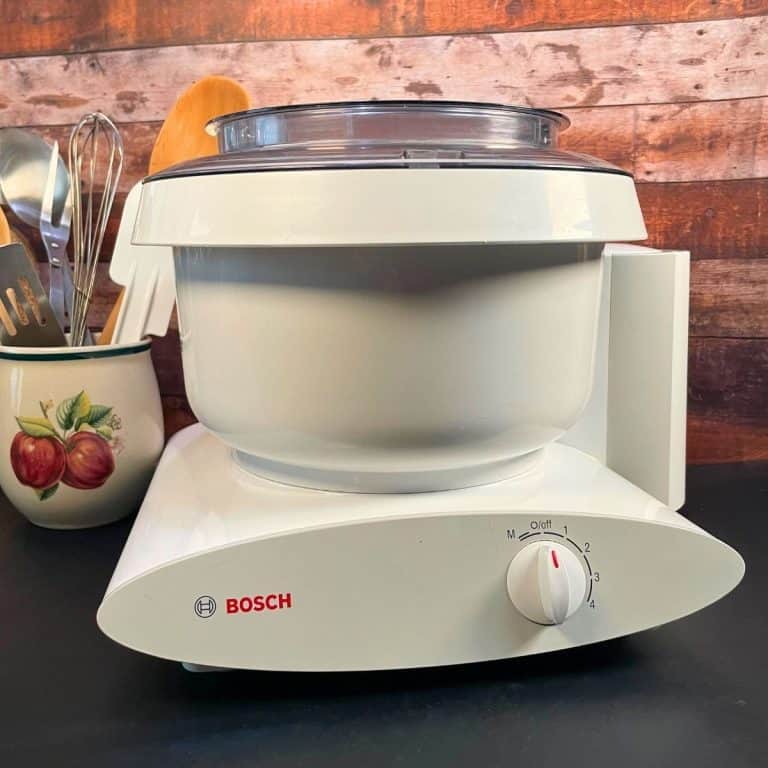
Once cool, begin whipping the tallow blend on high. Stop the mixer and scrape down the bowl frequently to ensure thorough mixing. Add the arrowroot powder about midway through the mixing. It helps the consistency if you feel the tallow balm feels too greasy. Start with 1 teaspoon and increase as needed. (I like 2 teaspoons in my whipped tallow balm). Mix until it reaches a smooth texture.
 Oil mixture at room temperature.
- Beginning to whip tallow.
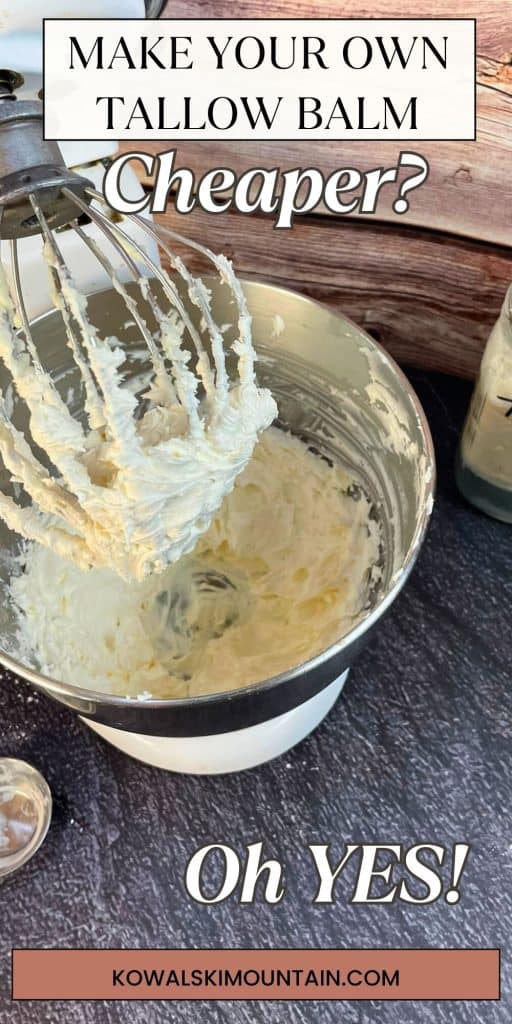
- Finished whipped tallow balm.
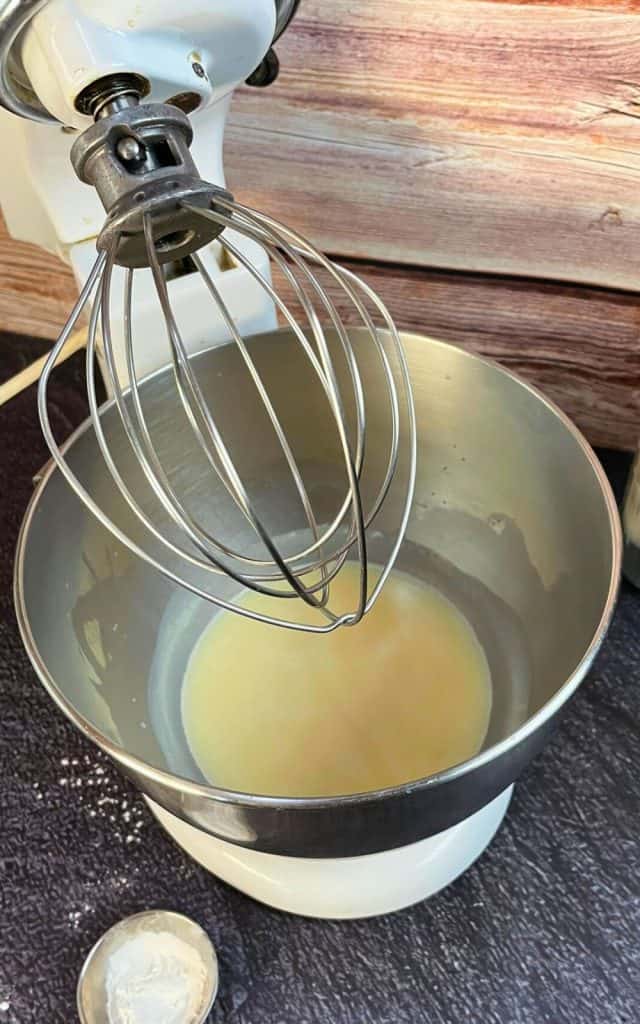


Once smooth, put the deer tallow balm into glass jars. I find it easiest to fill the jars using a ziplock bag cut like a pastry bag. Snip off one corner and squeeze the balm into the jars. Store extra jars in a cool, dry place.

The latest on Youtube:
How to Use Deer Tallow Balm
Tallow balm is my favorite body butter for all moisturizing needs. It’s perfect in the winter months when my hands are dry and cracked from hard work and harsh cold. It’s my daily face cream, helping to naturally reduce fine lines and protect my skin from windburn. It’s my favorite lip balm for sore, chapped lips. I don’t make fussy lip balm tubes. At home, I use my main jar, but you can put a small jar in your purse for travel.
I use it on the homestead, too. Unscented deer tallow balm is a natural balm to use on my cows’ udders to calm irritation when they are chapped. When you use food safe oils, such as olive oil, there is no need to worry about nursing calves.
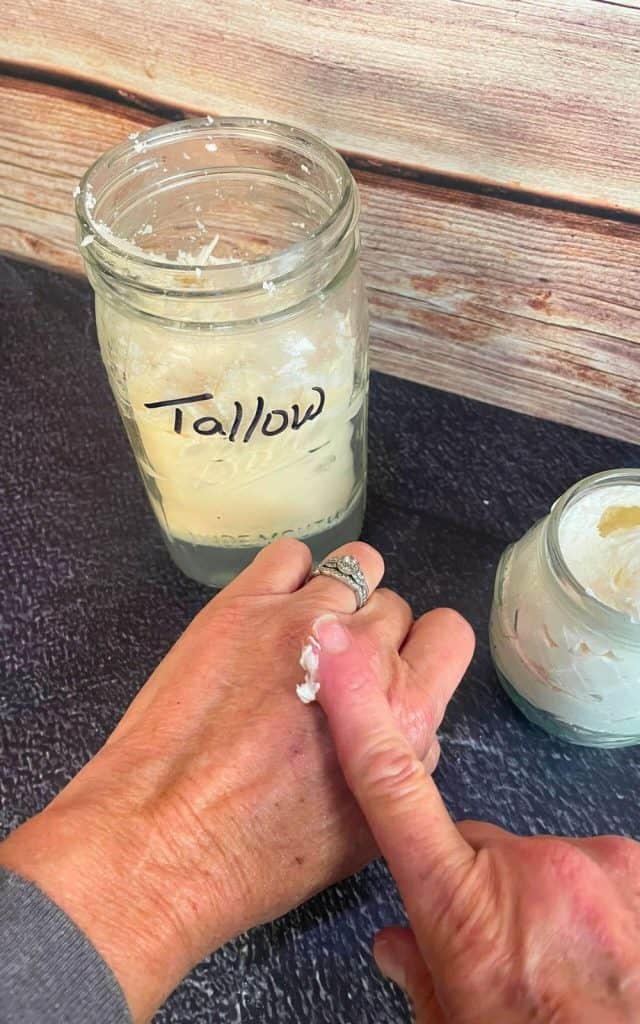
Cost to Make Tallow Balm
If you have ever purchased whipped tallow balm, you know it costs a pretty penny. You will be shocked at the cost breakdown. I am going to break this down two ways, one for the person rendering their own tallow and an additional breakdown for those who purchase grass-fed, grass-finished tallow. Either way, you save a fortune!
Render your own Tallow
Deer Tallow Balm= $9.27
Purchase Tallow
Beef Tallow Balm= $22.95
Luxurious Deer Tallow Balm
Deer tallow balm has become one of my favorite simple, natural skincare staples, not just because it’s effective, but because it lets me use every part of the animal harvest in a meaningful way. Whether you make tallow balm from wild game fat or purchase high-quality beef tallow, this traditional moisturizer is an easy, cost-efficient upgrade to your skincare routine. Every person should experience just how nourishing, affordable, and practical homemade skincare can be.
Find this post helpful?
Share it on Pinterest
FAQ
All tallow has a slight smell. While you can render the fat many times, excessive rendering and rendering at high heat can affect the quality of the tallow. I render as many times as needed to remove impurities, but I accept that tallow has a slight smell. The good news is, it doesn’t transfer to your skin. I never smell weird when using it.
Yes, using a natural tallow balm is safe for sensitive skin. The best thing about making your own is that you know exactly what’s in it, and you can use ingredients you know you can tolerate. Since sensitivities are different for every person, like all skin products, test a small amount of balm on your skin before lathering up.
While it’s true that deer don’t have as much fat as domestic animals, they do have both back fat and suet fat. I combine both to make my deer tallow.
If you have a friend or neighbor who hunts, ask them to save the fat for you. If you hunt at a hunting camp, many hunters will toss excess fat. Request that they save it for you or meet them at the skinning rack to give them a hand!
Absolutely! Beef tallow works perfectly in this recipe and is easier to source for most people.
Every person’s skin reacts differently. I personally have never broken out from using tallow on my face. However, some people do. Be sure you do a skin test on a small area the first time to find out. BUT, don’t throw the baby out with the bathwater, just because you find it irritating to your face, use it as a body butter instead.
Easy Tallow Balm
Equipment
- double boiler
- electric mixer
- glass jars
Ingredients
- 8 ounces tallow
- 2 ounces liquid oil olive oil. argan oil, rosehip oil, jojoba oil, avocado oil
- 1 tsp vitamin E oil
- 2 tsp arrowroot powder
- 25 drops skin-safe essential oil lavender, tea tree, frankincense, chamomile, bergamot, sandalwood, cedarwood, rosemary, and geranium
Instructions
- Add water to your double boiler and bring the water to a boil. Place your oil bowl into the double boiler while the water heats. Gently melt 8 ounces of tallow until just melted; don't overheat.
- Add 2 ounces of your choice of liquid oil and 1 teaspoon of vitamin E (if using), stirring well.
- If you are using essential oils, add them while the oils are melted to blend them thoroughly. Start with 25 drops of essential oils.
- Allow to cool to room temperature.
- Once cool, begin whipping the tallow blend on high. Stop the mixer and scrape down the bowl frequently to ensure thorough mixing.
- Add the arrowroot powder about midway through the mixing. Start with 1 teaspoon and increase as needed. Mix until it reaches a smooth texture.
- Once smooth, put the deer tallow balm into glass jars.
- Store extra jars in a cool, dry place.
Video
Notes

About the Author: Barbra-Sue Kowalski grew up on a small hobby farm. She was always drawn to farm life, however, she was stuck in an urban life far from her roots. Barbra-Sue was a single mom for 13 years, raising her 3 children on her own. She met Philip in 2018 and they married in 2021. Between the two of them, they have 5 grown children and 6 grandchildren. These empty nesters are following their dreams! As they both turn 50, they are building their off-grid homestead to live the life that they dream about. Learn more about Philip and Barbra-Sue here. Contact them here. To leave a comment on this post, please scroll down.


I love using tallow as my go-to skin care product. It’s perfect for my face, hands, and lips! I love the cost savings of making my own whipped tallow balm!