
What to Feed Baby Chickens After Hatching: A New Chick Feeding Guide

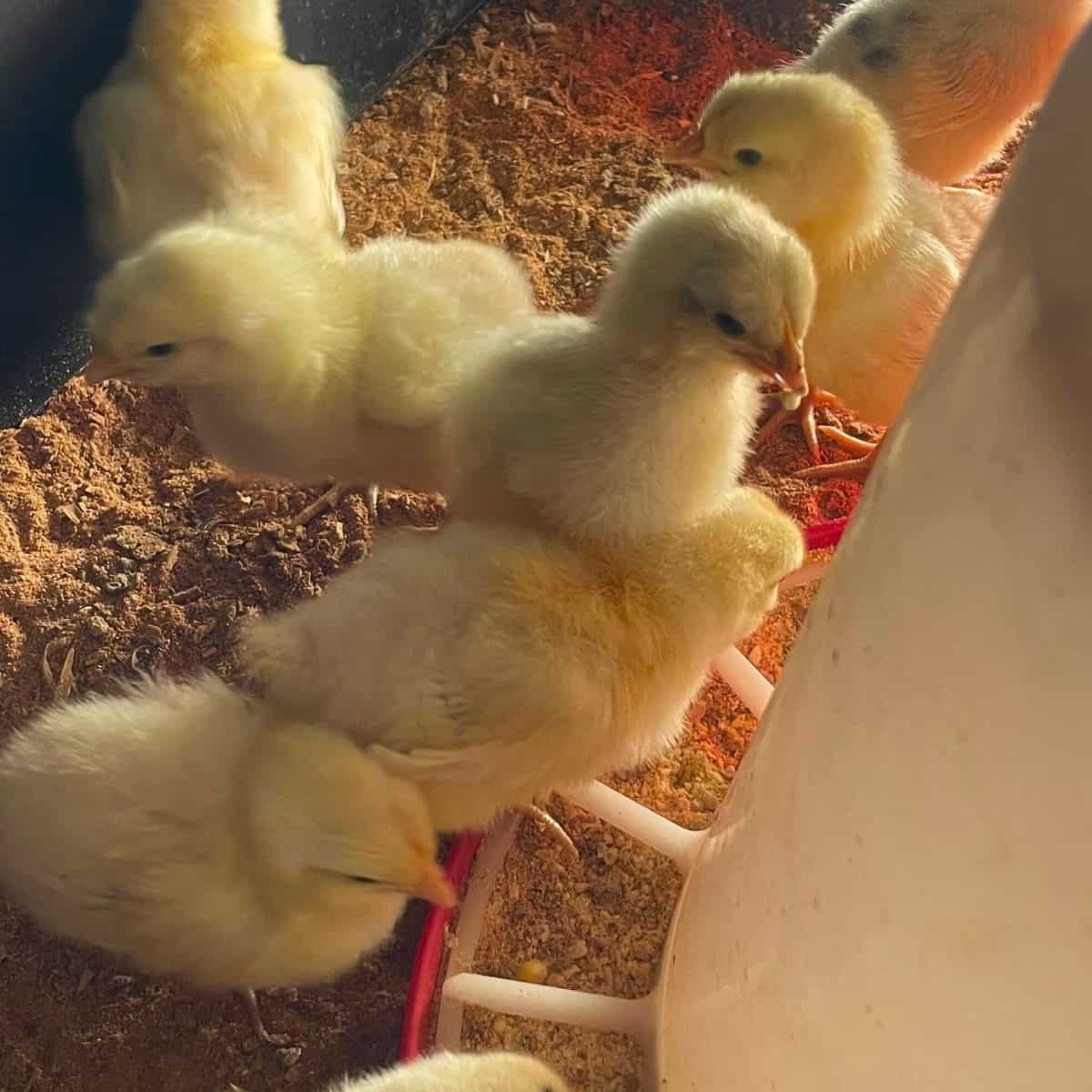
Raising new chickens is exciting, but if you’ve ever wandered around a farm supply store, it can feel overwhelming trying to decide what to feed them. The good news is chicks don’t need much for a strong start! With the right feed and a simple setup, your chicks will thrive. I’ll help you decide what to feed baby chickens after hatching. With just a few key essentials, you’ll be ready to nourish your new flock from their very first day.
When Do Baby Chicks Start Eating?
The most amazing thing about new chicks is that they receive all the nourishment they need for the first 48 to 72 hours from their egg. The yolk sac, which includes the egg yolk and surrounding tissue, is nutrient-rich, providing chicks with not only essential nutrients but also antibodies from their mother.
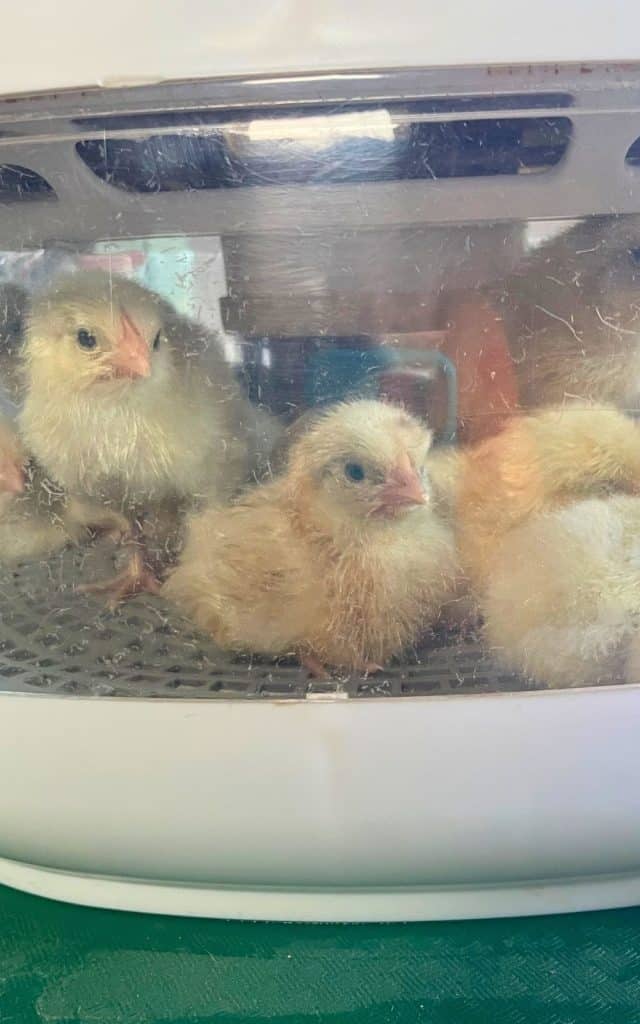
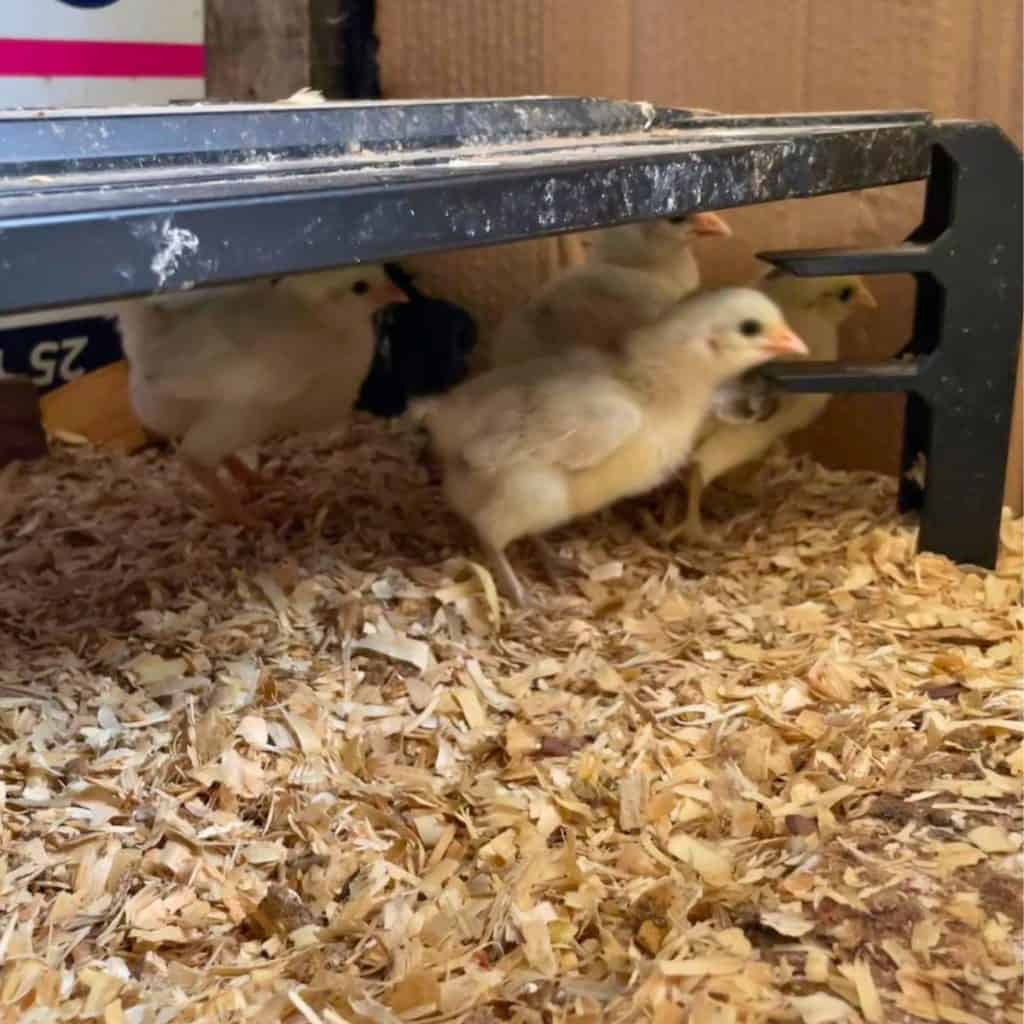
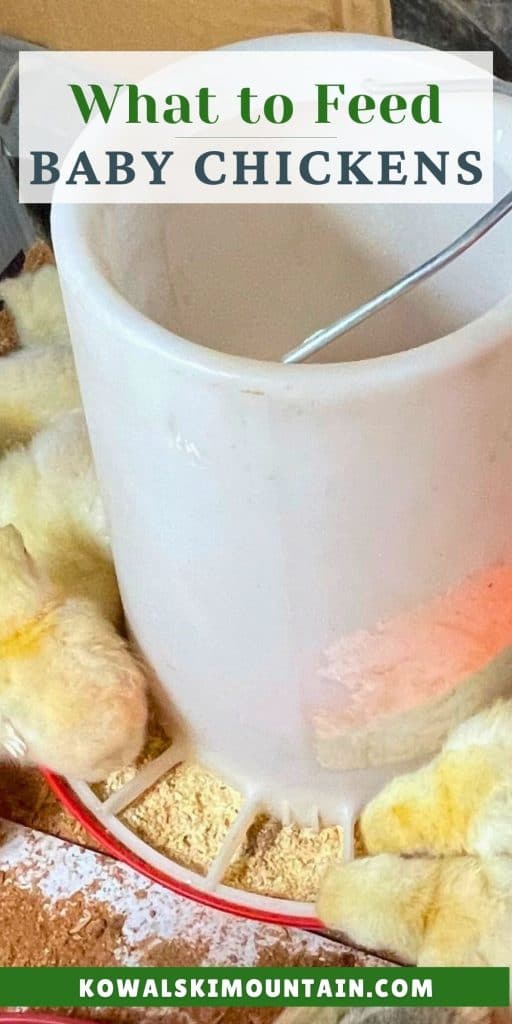
Baby chickens hatched in an incubator are more likely to hatch within a narrow window of time, as they started their incubation process simultaneously. As chicks hatch, there is no rush to remove them from the incubator. As long as the incubator is not overcrowded, I may leave chicks up to a day. Once the chicks are fully dried and fluffy, move them to the brooder where you can offer their first chicken food. I prefer to use chick-sized feeders in the brooder because they take up less space. Don’t be alarmed if the chicks are not immediately interested in the grain. Chicks may not begin to eat until the second or third day.
Purchasing Chicks
Chicks purchased from hatcheries use this narrow window of time to their advantage. Newly hatched chicks are boxed and shipped within hours of hatching. They are not provided with any food or water during shipment. Hatcheries use small boxes and a minimum number of chickens to help maintain their body heat.
When chicks arrive, while they will be ready to start eating, clean water and warmth are the most important basic needs that should be addressed first. Cold chicks will not seek food, no matter how much they need it. It’s common practice to dip each chick’s beak into warm water as you put them into the brooder to give them a tiny sip and to show them where they can find the water. Provide your chosen complete feed in the brooder right away. As they warm up, they’ll begin seeking out additional water and eventually food. Often, the first hungry chick will lead the rest. Once one starts pecking in the dish, the others quickly follow.
If you are purchasing chicks locally in a farm store, they are likely mail-order chicks that will be ready to begin eating right away! Some small feed stores buy chicks from local farmers; however, these little chicks are likely old enough to start eating grain as well. Provide both food and water immediately to chicks that are purchased locally.
When Your Hen Hatches Her Own Chicks
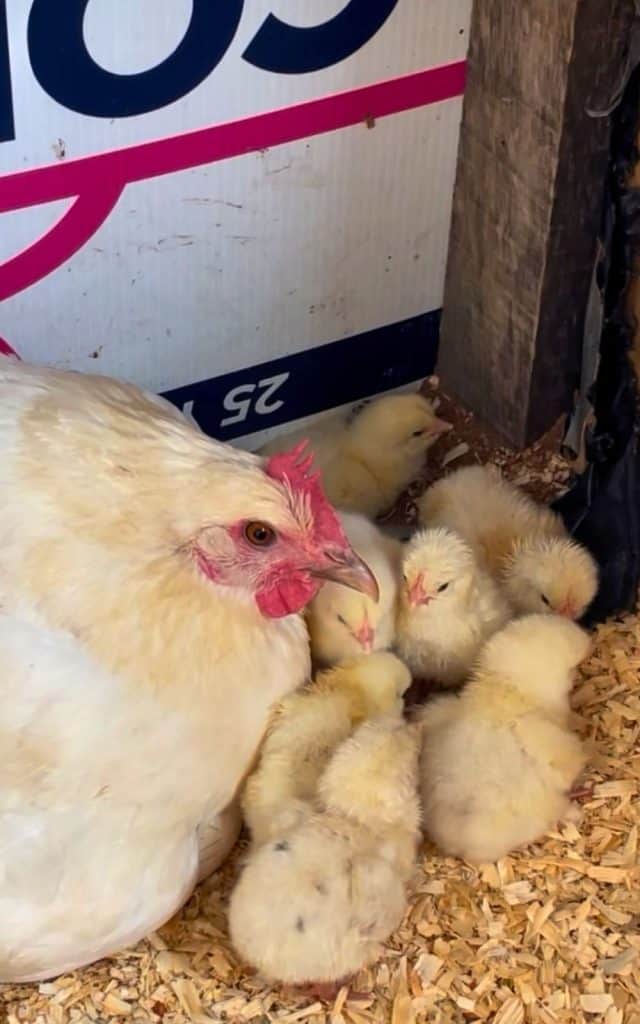
Chicks hatched under a broody hen could hatch over several days. The mother hen will keep her young chicks close as she patiently waits for the remaining eggs in her clutch to hatch. Just like chicks hatched in an incubator, there is no big rush to move them.
Since the mama hen chooses the location of her nest box, as long as the chicks are safe and can’t fall out of the nest, I leave them for a day or so. Hens that can easily leave the nest with their chicks may not need any assistance. However, most of my nest boxes are high above the ground. After about 48 hours, I usually move my momma hen, her chicks, and any remaining eggs into a brooder for a short time to allow any lingering eggs to hatch. This gives my tiny chicks a little room to stretch their legs while the remaining chicks hatch.
I must admit, it’s adorable to see a momma hen surrounded by her day-old chicks mingling in the yard with the backyard chickens. However, to give the chicks their best start, I like keeping them in a separate coop for at least a few weeks. It’s the easiest way to ensure chicks get the grower feed they need without competing with older chickens.
What to Feed Baby Chicks After Hatching?
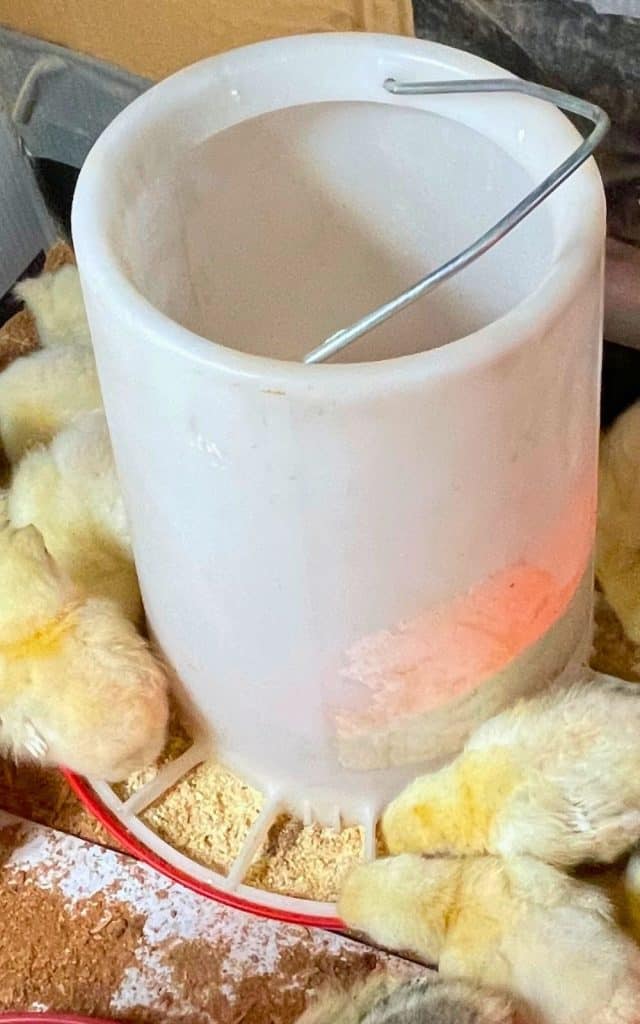
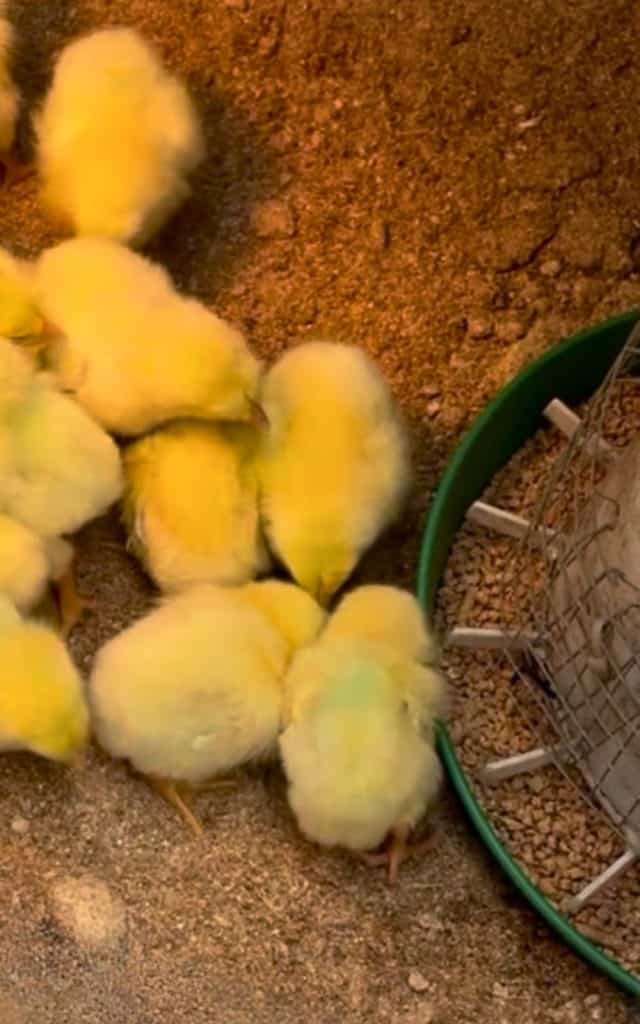
A complete chick starter feed is the best way to provide your chicks with complete nutrition. Chick starter includes the grains that provide energy, protein, fiber, vitamins, and minerals essential for the growth and development of chicks in the first weeks of life. Typically, they contain 18-20% protein.
I feed my chicks free choice grain, meaning they have unlimited access to feed available to them at all times. The one exception to this is Cornish Cross broilers. Cornish cross broilers are only given free-choice grain for the first week; following that, they are put on a strict feeding regimen. When selecting starter feed, you have a few choices to make.
Medicated or Non-Medicated Feed
While chicks receive limited antibodies from the yolk sacs, chicks don’t receive any additional antibodies from their mother, whether they live with her or not. Medicated chick starter is a preventative measure to protect your chicks from a deadly disease called coccidiosis. I usually use this with all my chicks, but I personally feel it’s most important for chicks that are ordered from hatcheries. As a side note, medicated feed is not to be used for turkey poults.
Crumble, Pellets, or Mash
The granule size of the grain comes in a few options.
Fresh Water
Like all animals, fresh water is a must. We add a splash of apple cider vinegar to improve gut health. I like to use chick-sized waterers since they fit better in our brooder. You’ll also want to be careful that tiny chicks can’t get into their water bowl, where they can drown. Yes, this really happens! There are different-sized waterers available. We use a small piece of hardware cloth that fits down into the water reservoir. It needs to allow the chicks to be able to reach the water, but not climb into the bowl. Use room temperature water; cold water can chill chicks’ tiny bodies.
Changing Nutritional Needs
When chicks are about 6 weeks of age, their nutritional needs change. Feed companies recommended switching chicks to a grower feed. Look at the label of the feed you have selected. Many chick starters are a chick starter and grower in one. Since we have an established flock, it is very hard to provide separate grain types to adolescent chickens. Our chickens will transition to layer pellets when we begin integrating them into the flock. If you do not have an established flock, continue to feed grower feed until the chicks are 16 to 18 weeks of age, as they begin preparing to lay eggs.
A Strong Start for Your Newly Hatched Chicks
A quick visit to your local farm store makes it easy to provide complete nutrition for your growing flock. While your chicks may have arrived on your homestead in a variety of ways and have different needs to give them a solid start, a quality chick starter, fresh water, and a warm, safe draft-free place are all that chicks really need to flourish.
New to raising chickens, you may like these:
FAQS About Feeding Baby Chickens
Chicks receive nourishment from their egg sufficient to last 48 to 72 hours. Many chicks won’t begin eating until the second or third day.
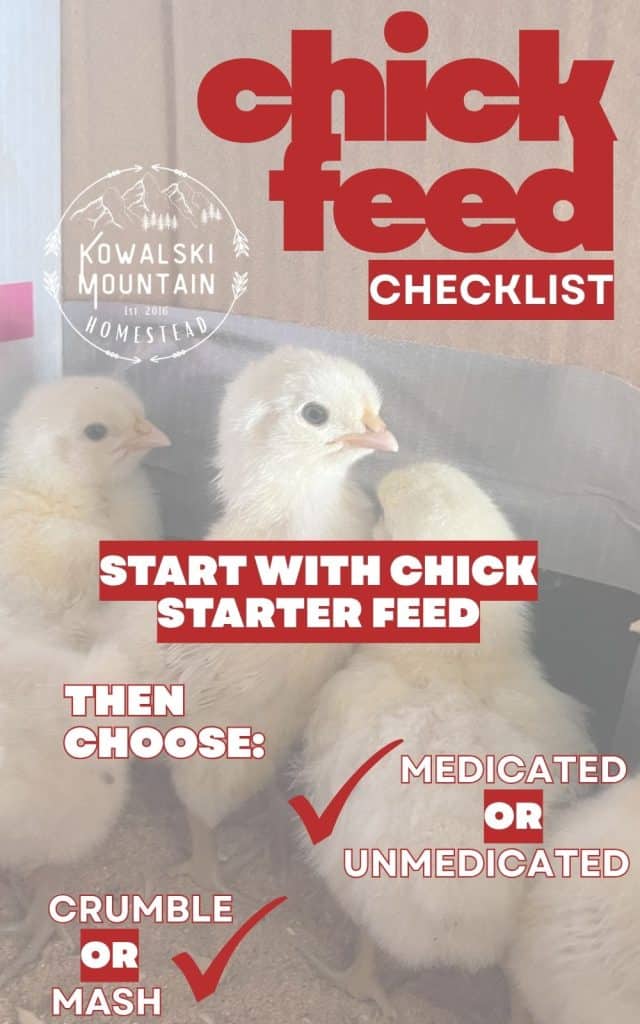
New chicks are fed chicken grain called Chick Starter. Choose medicated or unmedicated. Choose your granule size: crumble or mash. While most chicken keepers have preferences, as long as you provide Chick starter, the chicks will likely thrive. I say likely, because no matter what you do, you will eventually experience chick loss as a chicken owner.
Since chickens don’t have teeth, they eat their food whole. Grit is simply tiny stones and pebbles that chickens eat to help grind the chicken’s food in its gizzard. Commercial chicken grain is water-soluble and will dissolve in the crop and stomach before it reaches the gizzard. Young chicks that are fed only a commercial chicken feed do not need grit. As chickens are introduced to more foods or are allowed to free range, they will need grit to help digest their food. If your chickens have access to dirt, likely they will find all the grit they need without you purchasing it. In winter, when the ground is covered with snow for long periods of time, you may need to supply your chickens with grit.
Scratch grain is a common treat given to chickens. Just like human babies, save the treats till the chicks get older. Establish healthy eating habits when the chicks are young. Unlike chick starter, scratch is a whole grain and is not water-soluble in thier digestive system.
If your chicks live with their momma, she can eat the chick starter too; no need to provide her with different food. While chick starter is not designed for her nutritional needs, it won’t hurt her for a short period of time.
Find this post helpful?
Share it on Pinterest

About the Author: Barbra-Sue Kowalski grew up on a small hobby farm. She was always drawn to farm life, however, she was stuck in an urban life far from her roots. Barbra-Sue was a single mom for 13 years, raising her 3 children on her own. She met Philip in 2018 and they married in 2021. Between the two of them, they have 5 grown children and 7 grandchildren. These empty nesters are following their dreams! As they both turn 50, they are building their off-grid homestead to live the life that they dream about. Learn more about Philip and Barbra-Sue here. Contact them here. To leave a comment on this post, please scroll down.



One Comment